
Main Courses
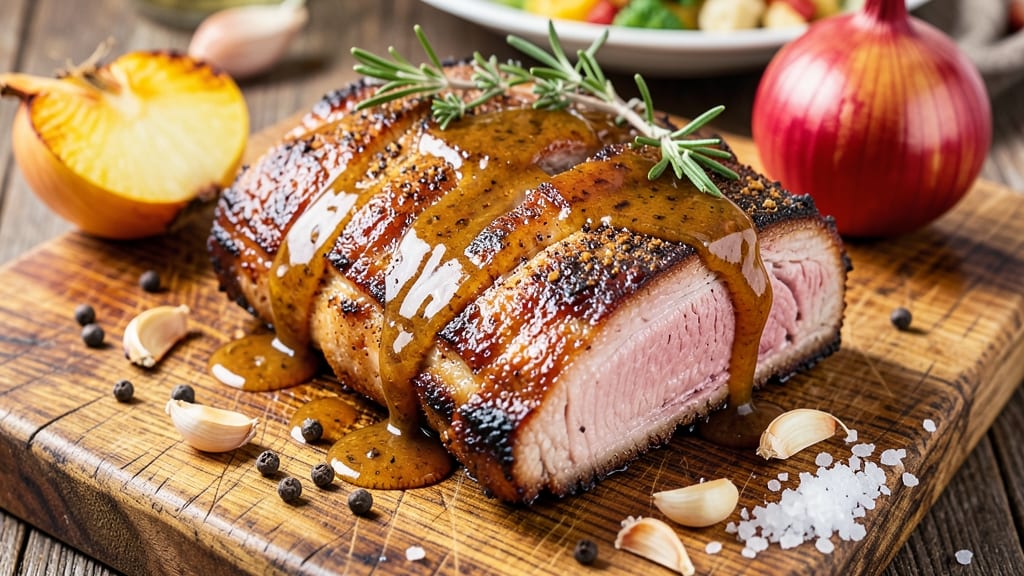
This BBQ pork rib roast recipe delivers melt-in-your-mouth tenderness that makes every bite worth the wait. 🔥 As a pitmaster trained in French technique, I've perfected the slow-smoked crust that locks in moisture while developing deep, smoky flavors.
The 3-2-1 method—3 hours smoking, 2 hours wrapped, 1 hour unwrapped—creates that perfect bark without drying out the meat.
The secret lies in proper preparation: trimming the ribs, applying a dry rub that balances sweet, smoky, and spicy notes, and maintaining consistent temperatures (225-250°F) throughout the cook. Whether you're using a pellet grill, charcoal smoker, or even your oven, this method delivers restaurant-quality results at home.
The key is patience—letting the collagen break down slowly for that irresistible tenderness.
By the time you're ready to serve, you'll have ribs with a crispy exterior that shatters at the touch and succulent meat that falls off the bone. The sauce application in the final hour adds that sticky, tangy finish that ties everything together.
This isn't just BBQ—it's a showstopping centerpiece that transforms any gathering into a celebration of slow-cooked perfection.
Pair with classic sides like creamy coleslaw and buttery cornbread for the full experience. The beauty of this recipe is its versatility—it works equally well for family dinners or competitive BBQ events. Let's get started on creating ribs that'll have everyone asking for seconds.
Ingredients for bbq pork rib roast
Six essential ingredients plus technique create ribs with restaurant-quality tenderness and smoky crust.
| Ingredient | Amount | Notes |
|---|---|---|
| Pork Ribs (Baby Back) 🍖 | 4 lb | Fresh cut, membrane removed |
| Yellow Onion 🧅 | 1 whole | Large, sliced into rings |
| Garlic Cloves 🧄 | 8 cloves | Fresh, peeled and minced |
| Brown Sugar 🍚 | ½ cup | Packed, light or dark |
| Smoked Paprika 🌶️ | 2 tbsp | High-quality for smokiness |
| Ground Black Pepper 🌶️ | 1 tbsp | Freshly cracked preferred |
| Kosher Salt 🧂 | 2 tbsp | Diamond Crystal preferred |
| Ground Cumin 🌿 | 1 tbsp | Toasted for depth |
| Chili Powder 🌶️ | 1 tbsp | Medium heat preferred |
| Apple Cider Vinegar 🍎 | ¼ cup | For tenderizing solution |
| Butter (Unsalted) 🧈 | ½ cup | Cold, cubed for wrapping |
| BBQ Sauce 🍅 | ½ cup | Store-bought or homemade |
| Wood Chips (Hickory or Oak) 🌳 | 2 cups | Soaked for 1 hour |
| Aluminum Foil 📄 | 1 sheet | Heavy-duty preferred |
The ribs are non-negotiable—baby back cuts deliver the perfect balance of meat and fat for that melt-in-your-mouth texture. Source them from a trusted butcher or Costco for consistent quality; avoid pre-cut ribs with exposed edges that dry out faster. For the dry rub, Penzeys or bulk bins at Whole Foods yield superior spices with vibrant color and aroma. The smoked paprika should have a rich, campfire-like scent—if it smells stale, replace it. Toast your cumin seeds briefly in a dry pan before grinding for an aroma that transforms this dish from good to extraordinary. Remember: proper preparation starts with fresh, high-quality ingredients that can withstand the slow cook without losing moisture.
No smoked paprika? Substitute with a mix of regular paprika and a pinch of liquid smoke—though nothing beats the real thing. Running short on apple cider vinegar? White vinegar or lemon juice work in a pinch, though apple cider adds subtle sweetness that complements the pork. For the butter wrap, use full-fat—low-fat versions won't render enough fat for that signature bark. The BBQ sauce can be any quality, but avoid watery brands that won't adhere properly during the final basting. If you're using a pellet grill, hickory pellets deliver that classic BBQ flavor, while oak offers a slightly fruitier profile. For charcoal smokers, soak your wood chips in water for at least one hour before use to prevent flare-ups that can burn the ribs.
Store your dry rub in an airtight container away from light for up to 6 months—the spices retain their potency longer when protected. The ribs themselves should be cooked immediately after preparation, but you can prep the dry rub and wood chips a day ahead. If you must store prepped ribs, wrap them tightly in foil and refrigerate for up to 2 days—though fresh prep yields the best results. The leftovers, if any, reheat beautifully in a 350°F oven for 15 minutes, covered with foil, then basted with extra BBQ sauce. For maximum flavor, serve immediately after smoking—every minute on the cutting board lets those juices escape.
Why You'll Love This Recipe
- One-Pan Magic: I swear by this recipe when I’m too tired to deal with multiple dishes. Baby back ribs, onions, and garlic all go on one sheet pan—no fancy prep, just toss, roast, and boom—done. The brown sugar caramelizes into a sticky glaze that needs zero babysitting.
- Sweet-Smoky Bomb: That combo of smoked paprika and brown sugar? It’s like a hug for your taste buds. The ribs get this perfect balance of sweet, smoky, and just a hint of heat—plus, the onions turn into crispy, jammy bits that disappear faster than you can say “seconds?”
- Weeknight Wonder: Between us, this is my go-to when I’ve got friends over but no time to slave away. Serve it with crusty bread for dipping, or pile it on buns for sandwiches—even my picky teenage nephew asks for it. Honestly, it’s the kind of dish that makes you look like a hero without trying.
- Leftovers That Don’t Suck: I make this on Sundays because the leftovers are actually better the next day. The ribs stay tender, the sauce gets even more concentrated, and I can toss them into tacos, salads, or even fried rice. Not to mention, it’s way cheaper than takeout—one roast feeds my family for days.
Step-by-step instructions for slow-smoked BBQ pork rib roast
Mastering this technique ensures tender, juicy ribs with a perfect bark every time.
🔥 Step 1: Prepare the Ribs for Maximum Flavor and Moisture
Start by removing the membrane from the bone side of the 4 lb pork ribs (baby back). I use a butter knife to gently pry it away—start at one edge and work your way across. This step is crucial because the membrane prevents flavor penetration and creates a barrier between the meat and smoke.
Next, create a tenderizing solution by combining 0.25 cup apple cider vinegar, 0.5 cup brown sugar, 2 tbsp smoked paprika, 1 tbsp ground cumin, 1 tbsp chili powder, 1 tbsp ground black pepper, and 2 tbsp kosher salt in a bowl. Whisk until the brown sugar dissolves completely. Brush this mixture generously over both sides of the ribs, making sure to get into all the crevices. Let them sit for 30 minutes at room temperature before smoking.
🔥 Step 2: Set Up the Smoker for Perfect Low-and-Slow Cooking
Soak the 2 cups wood chips (hickory or oak) in water for at least 1 hour before using. This prevents them from burning too quickly and creates the ideal smoke. Set your smoker to 225°F—this low temperature is key for tenderizing the tough connective tissue in the ribs without drying them out.
When the smoker reaches temperature and you see thin, blue smoke (not thick white steam), place the ribs bone-side down on the cooking grates. This orientation allows the fat to render slowly and baste the meat. Close the lid and resist the urge to check them frequently—each time you open the lid, you lose heat and extend cooking time.
⏰ Step 3: Cook Until Probe-Tender with the Crust Lock Technique
Smoke the ribs for 4-5 hours until the internal temperature reaches 195-203°F and a meat probe slides in like butter. Here's where the crust lock comes in: when the ribs hit 165°F (usually around 3 hours), wrap them tightly in the 1 sheet aluminum foil with 0.5 cup cubed butter (unsalted) and 0.5 cup BBQ sauce.
Fold the foil into a tight packet, sealing all edges completely. Return the wrapped ribs to the smoker and continue cooking. The butter and sauce create a moisture barrier that locks in juices while the foil traps steam, preventing the surface from drying out. This technique is what guarantees that moist, fall-apart texture you're after.
🔪 Step 4: Rest and Serve for Maximum Juiciness
Once the ribs reach the target temperature, remove them from the smoker and let them rest for 15-20 minutes before serving. This resting period is critical—it allows the juices to redistribute throughout the meat instead of pooling in the center. Don't skip this step, even though it's tempting to cut into them immediately.
To serve, unwrap the ribs and slice between each bone. The meat should be fork-tender with a beautiful mahogany bark on the outside. Brush any remaining BBQ sauce from the foil packet over the top for extra flavor. Serve with the sliced 1 whole yellow onion and 8 cloves minced garlic that were part of your original seasoning blend—these make excellent garnishes or side components.
Pro Tips For Making Bbq Pork Rib Roast
- Trim the Fat First: Baby back ribs have that thin fat cap—leave it on, but score it in a crosshatch pattern with a sharp knife. This lets the rub cling better and renders fat faster without turning your pan into a grease fire. (Yes, even if you’re impatient like me, resist the urge to rush this.)
- Brown Sugar Needs Heat: That brown sugar isn’t just for sweetness—it’s for caramelization. After searing the ribs, sprinkle it on while the pan’s still smoking hot. If you add it cold, you’ll just end up with sticky, underdeveloped glaze. Think of it like making candy apples: patience here pays off.
- Don’t Crowd the Pan: I learned this the hard way—dumping all the ribs in at once steams them instead of searing. Work in batches, even if it takes twice as long. You want a crust, not a sad, greasy mess. (Your future self will thank you when those ribs glaze up like they’re supposed to.)
- Smoked Paprika > Regular: Skip the regular paprika unless you’re okay with ribs that taste like a generic BBQ blend. Smoked paprika adds depth right from the start—mix it into the rub with the brown sugar and garlic. It’s the difference between "meh" and "wow" in one teaspoon. (I was skeptical until I tried it.)
Creative variations of these flavors
Spicy Carolina Style
For a bold kick, swap the BBQ sauce for a vinegar-based Carolina-style sauce made with apple cider vinegar, hot sauce, and a touch of brown sugar.
I like to add 1 tbsp cayenne pepper to the dry rub for extra heat, then finish with a sprinkle of crushed red pepper flakes before serving. The vinegar cuts through the richness while the cayenne adds depth that pairs perfectly with the smoky ribs. 🌶️
Honey-Glazed Asian Fusion
Infuse your ribs with Asian flavors by adding 2 tbsp grated fresh ginger and 1 tbsp minced garlic to the tenderizing solution.
After the initial smoke, brush the ribs with a glaze made from ½ cup honey, 2 tbsp soy sauce, and 1 tbsp rice vinegar during the final hour. The honey caramelizes beautifully, creating a sticky, sweet contrast to the smoky bark. Garnish with sliced scallions for freshness. 🍯
Bourbon-Infused Southern Style
Elevate your ribs with a Southern twist by incorporating 2 tbsp bourbon into the BBQ sauce during the final basting. I also add 1 tsp smoked salt to the dry rub for a deeper, more complex flavor.
The bourbon adds a subtle warmth that complements the smokiness, while the smoked salt enhances the crust. Serve with pickled jalapeños on the side for a tangy crunch. 🥃
Herb-Crusted Mediterranean Twist
For a Mediterranean-inspired variation, replace the cumin in the dry rub with 1 tbsp dried oregano and 1 tsp dried thyme. Add 2 tbsp chopped fresh rosemary and 1 tbsp chopped fresh parsley to the tenderizing solution.
After smoking, coat the ribs in a crust made from ½ cup breadcrumbs, 2 tbsp olive oil, and 1 tsp lemon zest before finishing in the smoker. The herbs add a bright, aromatic note that pairs beautifully with the smoky flavor. 🌿
Breakfast Ribs
Turn your ribs into a breakfast sensation by adding 1 tbsp ground mustard and 1 tsp onion powder to the dry rub.
After smoking, brush the ribs with a mixture of ½ cup maple syrup, 2 tbsp Dijon mustard, and 1 tbsp apple cider vinegar during the final hour. Serve with scrambled eggs and buttermilk biscuits for a hearty morning meal.
The sweet and tangy glaze adds a unique twist that’s perfect for brunch. 🍳
Nutrition facts
Frequently asked questions
Can I use bone-in pork ribs instead of baby back ribs?
Yes, but you'll need to adjust your cooking time. Bone-in pork ribs (like spare ribs) require 6-8 hours total due to their larger size and more connective tissue. The 3-2-1 method still applies, but extend each phase proportionally. For example, smoke for 5-6 hours before wrapping, then 2-3 hours wrapped, and finish with 1-2 hours unwrapped. The key is maintaining 225-250°F throughout.
What's the best way to check doneness without a meat thermometer?
Use the "bend test" for ribs: when they're done, the bones should bend slightly with gentle pressure. Look for a mahogany crust and meat that easily pulls apart with a fork. For baby back ribs, the meat should be tender enough to separate cleanly between the bones. If you're unsure, aim for 4-5 hours total cook time before unwrapping.
Can I make these ribs in my oven instead of a smoker?
Preheat your oven to 225°F and use a meat probe to maintain temperature. Place ribs on a wire rack over a baking sheet with 1 cup water in the bottom. Follow the same 3-2-1 method, wrapping tightly in foil with butter and sauce at the 165°F mark. The oven method works best with a rib roasting pan for even heat circulation. Expect slightly longer cook times—about 10-15% more than smoker times.
Why did my ribs turn out dry instead of tender?
Most likely, you unwrapped them too early or cooked at temperatures above 250°F. The crust lock technique requires wrapping at 165°F and maintaining 225-250°F throughout. Also, check your rib source—leaner cuts dry out faster. For next time, try adding 1/4 cup apple juice to the foil wrap along with the butter to boost moisture retention.
How far ahead can I prepare the dry rub?
Store your dry rub in an airtight container for up to 3 months in a cool, dark place. The spices retain their potency longer when protected from light and moisture. For best results, use within 2 weeks of making it. The tenderizing solution (with vinegar) should be made fresh the day of cooking, but you can prep the wood chips and foil wrapping materials a day ahead.