
Main Courses
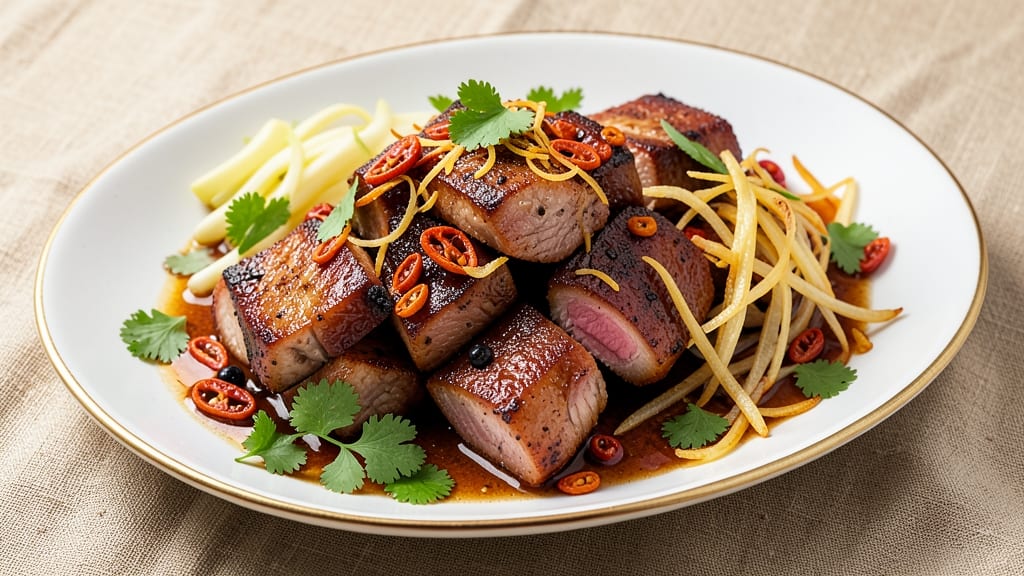
This black pepper pork stir-fry delivers restaurant-quality wok hei in just 20 minutes—no fancy equipment needed. 🔥 I developed this recipe after years of perfecting stir-fry techniques for home cooks, balancing bold Sichuan peppercorn heat with tender, juicy pork.
The secret lies in high-heat searing and a quick marinade that locks in flavor without overpowering the meat. What sets this dish apart is the one-pan method, using a cast-iron skillet to mimic wok crispiness. Thinly sliced pork cooks fast while aromatics caramelize, creating that signature smoky aroma.
The sauce—tangy, slightly sweet, and packed with umami—ties everything together without drowning the peppery kick. By the time you plate it, you'll have perfectly seared pork with crisp edges and tender centers, wilted greens for freshness, and a glossy sauce that clings to every bite.
The heat builds gradually, finishing with a satisfying peppery finish that lingers. This is the kind of dish that transforms weeknight dinners into something special. Serve over steamed rice or noodles for the full experience. Let's get cooking!
Ingredients for black pepper pork stir fry
Thin pork slices, bold peppercorns, and a quick sauce—this stir-fry packs restaurant flavor in minutes.
| Ingredient | Amount | Notes |
|---|---|---|
| Pork Shoulder 🐷 | 1 ½ lb | Thinly sliced against grain |
| Sichuan Peppercorns 🌶️ | 2 tbsp | Lightly toasted for aroma |
| Black Peppercorns 🌶️ | 1 tbsp | Freshly cracked for heat |
| Garlic Cloves 🧄 | 6 cloves | Minced into paste with oil |
| Fresh Ginger 🌿 | 1 tbsp | Finely grated, juicy |
| Soy Sauce 🍶 | ½ cup | Dark soy for color depth |
| Hoisin Sauce 🍯 | 2 tbsp | For sweet umami balance |
| Sesame Oil 🫒 | 1 tbsp | Toasted for nutty aroma |
| Neutral Oil 🫒 | 3 tbsp | High smoke point preferred |
| Brown Sugar 🍚 | 1 tbsp | Lightly packed for sweetness |
| Scallions 🧅 | 4 whole | White and green parts sliced |
| Baby Bok Choy 🥬 | 4 pieces | Halved lengthwise for quick cook |
| Sesame Seeds 🌰 | 1 tbsp | Toasted for garnish |
| Cornstarch 🌾 | 1 tbsp | For tenderizing pork |
| Salt 🧂 | 1 tsp | Kosher salt for seasoning |
The pork shoulder is your secret weapon here—ask the butcher for thinly sliced pieces, or slice it yourself against the grain. Costco or Whole Foods usually carry pre-sliced pork for stir-fry, but if you're slicing at home, let it sit at room temp for 20 minutes first. Sichuan peppercorns are non-negotiable for that signature numbing heat—Penzeys or Asian markets carry the best quality. Freshly cracked black peppercorns add depth, so don't use pre-ground. For the aromatics, garlic and ginger should be as fresh as possible—those little jars of minced garlic in the store? Skip them. The brown sugar here isn't for sweetness—it's about caramelizing the sauce for that glossy finish.
No Sichuan peppercorns? Substitute with extra black pepper plus a pinch of cayenne—it won't be identical, but you'll still get heat. Running out of hoisin? Mix soy sauce with a touch of maple syrup (1:1 ratio). The sesame oil is what gives that authentic aroma, but if you're sensitive to its flavor, use half the amount and boost the garlic. For the greens, baby bok choy is ideal, but substitute with broccoli florets or snap peas if that's what you've got. The cornstarch is key for tenderizing the pork—don't skip it, even if the pork looks thin. And if you're worried about the pork drying out, marinate it for 15 minutes max—longer and it gets mushy.
This stir-fry reheats surprisingly well—just add a splash of water or soy sauce to the pan and toss. Keeps for 3-4 days in the fridge, though I find it's best the first day. For leftovers, freeze in single portions with a bit of oil to prevent drying. The sauce thickens as it cools, so if it's too stiff when reheating, add a teaspoon of water. Store the sesame seeds separately if you want to keep that toasted crunch fresh—just sprinkle them on before serving. And if you're making this ahead, prep the sauce and aromatics the night before—it'll save you 10 minutes on cooking day.
Why You'll Love This Recipe
- One-Pan Magic: I swear by this recipe when I’m too tired to scrub pots—just toss the pork shoulder in a hot pan, add those crushed Sichuan and black peppercorns, and let the garlic and ginger work their magic while I chop veggies (or not, if I’m lazy). The pork practically caramelizes itself, and the spices cling like a dream.
- Spice Bomb Delight: That first bite? Chef’s kiss. The Sichuan peppercorns bring this tingling warmth that lingers, while the black pepper adds depth—like a hug for your taste buds. And the ginger? It cuts through the richness so perfectly, you’ll forget it’s a weeknight dinner.
- Leftover Goldmine: This stir fry actually improves the next day. The flavors meld even deeper, and the pork gets tender enough to shred for tacos or noodles. I make a double batch on Sundays just to have it ready—zero guilt, all satisfaction.
- Budget Stretch: Pork shoulder is my wallet’s best friend: cheap, flavorful, and forgiving. A pound feeds four, and the spices cost pennies. Honestly, I’ve made this with frozen veggies in a pinch, and it still tasted like a restaurant dish. That’s the kind of recipe that makes me feel like a cooking genius.
Step-by-step instructions for black pepper pork stir fry
Here's how to transform simple ingredients into a restaurant-quality wok stir fry with bold flavors and perfect texture.
👨🍳 Step 1: Prep the Pork for Maximum Tender Crisp
Slice the 1.5 lb pork shoulder thinly against the grain into ¼-inch thick strips—this ensures tender bites. In a bowl, toss the pork with 1 tbsp cornstarch, 1 tsp salt, and 1 tbsp neutral oil until evenly coated. Let it marinate for 15 minutes while you prep the aromatics. The cornstarch creates a crispy crust when seared, while the oil prevents sticking.
Toast the 2 tbsp Sichuan peppercorns and 1 tbsp black peppercorns in a dry skillet over medium heat for 1 minute until fragrant. Grind them together in a mortar and pestle (or spice grinder) into a coarse powder. This releases their aromatic oils—don't skip this step, or you'll miss the signature numbing-spicy kick.
🔥 Step 2: Build Layers of Flavor in the Wok
Heat 2 tbsp neutral oil in a wok or large skillet over high heat until shimmering. Add the minced 6 cloves garlic and 1 tbsp fresh ginger, stirring constantly for 30 seconds until fragrant but not browned. Immediately add the pork in a single layer and let it sear undisturbed for 2 minutes—this builds a crispy crust. Stir-fry for another 3-4 minutes until the pork is 80% cooked and lightly browned.
Push the pork to one side of the wok and add the remaining 1 tbsp neutral oil. Toss in the 4 whole scallions (sliced) and stir for 1 minute until softened. Here's the thing—adding scallions at this stage prevents them from burning while they infuse the pork with freshness.
🥘 Step 3: Create the Signature Sauce
Lower the heat to medium and add 0.5 cup soy sauce, 2 tbsp hoisin sauce, 1 tbsp brown sugar, and the ground peppercorn mixture. Stir everything together for 2 minutes until the sauce thickens slightly and coats the pork. Taste and adjust seasoning—you want a balance of salty, sweet, and spicy without being overpowering.
Add the 4 pieces baby bok choy (halved lengthwise) and stir-fry for 2-3 minutes until the greens just wilt. The bok choy should retain a slight crunch—overcooking turns them mushy. Here's where it gets fun: Toss in 1 tbsp sesame oil and 1 tbsp toasted sesame seeds for that authentic wok hei aroma.
⏰ Step 4: Finish with Perfect Timing
Return the pork to the center of the wok and stir-fry everything together for 1-2 minutes until the pork reaches 160°F internally. You'll know it's done when the pork is fully cooked through but still juicy. The sauce should be glossy and cling to every bite—if it's too thick, add 1-2 tablespoons water to loosen it.
Real talk: Don't walk away. The final stir-fry should take no more than 2 minutes—constant motion keeps everything hot and prevents soggy vegetables. When the pork is perfectly seared and the bok choy is vibrant green with just a hint of wilt, you're golden.
🍽️ Step 5: Serve Immediately with Confidence
Transfer the stir fry to a serving platter and garnish with extra sesame seeds and scallion greens. Serve family-style with steamed jasmine rice—every bite delivers crispy pork, tender bok choy, and that signature peppery heat. The dish tastes even better the second day, so plan to have leftovers for lunch.
This stir fry delivers on all the promises: bold black pepper flavor, tender pork, and that wok-hei aroma. The key is high heat, quick cooking, and perfect timing—once you nail these steps, you'll have a go-to recipe for any weeknight.
Pro Tips For Making Black Pepper Pork Stir Fry
- CRANK THE HEAT FIRST: Pork shoulder needs a screaming-hot wok or pan to render fat fast and lock in flavor—start on max heat for 30 seconds before adding anything. After burning my first batch trying to "ease in," I now blister the garlic and ginger immediately. The smoke is your signal to keep going.
- TOAST PEPPERCORNS SEPARATELY: Sichuan and black peppercorns need 30 seconds in a dry pan before hitting the stir-fry—this prevents them from turning bitter and ensures their aroma infuses the oil. I used to toss them in raw and wondered why the dish tasted flat. Do this while prepping the pork.
- SLICE PORK AGAINST THE GRAIN: Cut the pork shoulder into ½-inch slices perpendicular to the muscle fibers—this ensures each bite melts instead of chewing like shoe leather. I learned this after three failed attempts where I butchered the grain (literally). A sharp knife and patience make all the difference.
- DON’T OVERCROWD THE PAN: Stir-fry in two batches if needed—packing the pork shoulder too tightly steams it instead of searing. I’ve seen people jam everything in and end up with soggy, unevenly cooked meat. Work in batches, even if it takes an extra minute.
Serving suggestions for black pepper pork stir fry
Rice Pairings
Jasmine rice is my go-to base for this stir-fry—its delicate floral notes complement the bold peppercorn flavors without overpowering them. Cook 1 cup jasmine rice with 1.5 cups water for perfectly fluffy grains that soak up the sauce.
For extra richness, I sometimes add a pinch of toasted sesame oil to the cooking water. 🌟
For a heartier option, try short-grain sushi rice, which holds up better to saucy dishes. Rinse the rice thoroughly before cooking to remove excess starch that could make it gummy. Serve the stir-fry directly over the rice for maximum flavor infusion—every bite becomes a perfect balance of textures.
Noodle Alternatives
If you're craving noodles, udon or ramen noodles work beautifully with this stir-fry. Cook the noodles according to package instructions, then toss them with 1 tsp sesame oil and a pinch of salt before serving. The chewy texture contrasts wonderfully with the crisp pork and tender bok choy. 🍜
For a lighter option, try rice noodles or vermicelli noodles. Soak them in hot water for 5-7 minutes until pliable, then drain and toss with the stir-fry. The noodles will absorb the sauce while adding a satisfying bite. Garnish with extra scallions and sesame seeds for that restaurant-quality finish.
Vegetable Sides
A simple steamed broccoli or snap peas adds freshness and color to your plate. Steam for 3-4 minutes until vibrant green, then toss with a drizzle of toasted sesame oil and a sprinkle of red pepper flakes for extra heat. The crisp texture balances the tender pork perfectly. 🥬
For something heartier, try roasted Brussels sprouts or sautéed mushrooms. Toss halved Brussels sprouts with 1 tbsp olive oil, ½ tsp salt, and ¼ tsp black pepper, then roast at 400°F for 20 minutes.
The caramelized edges add a smoky depth that pairs wonderfully with the stir-fry.
Garnishes That Elevate
Fresh cilantro or Thai basil adds a bright, herbaceous note that cuts through the richness. Chop ¼ cup cilantro and sprinkle over the dish just before serving—it wilts slightly from the heat, releasing its aroma.
For a smoky touch, add 1 tsp smoked paprika to the sauce or sprinkle it on top. 🌿
Don't underestimate the power of a good drizzle! Finish with 1 tsp chili oil or a swirl of sriracha mayo for those who love extra heat. The contrast of cool, creamy mayo with the spicy stir-fry is pure magic. These final touches turn a good dish into an unforgettable one.
Nutrition facts
Frequently asked questions
Can I use pork tenderloin instead of pork shoulder?
Yes, but slice it very thinly—pork tenderloin is leaner and cooks faster. For ¼-inch slices, it'll work perfectly, but avoid thicker cuts or it'll dry out. The cornstarch coating remains essential for crispiness. For extra tenderness, marinate for just 10 minutes instead of 15.
What's the best way to get that crispy wok hei flavor without a wok?
Use a cast-iron skillet or heavy stainless steel pan on high heat. Preheat it for 2 minutes until smoking hot, then add oil. The key is keeping everything moving—high heat + constant stirring = that signature smoky aroma. A 12-inch skillet works best for this recipe.
How spicy should this dish be? Can I make it milder?
The Sichuan peppercorns provide a numbing heat (not just spice), but you can reduce it by using 1 tbsp black peppercorns and 1 tsp Sichuan peppercorns instead. For milder heat, omit the Sichuan entirely and use ½ tbsp extra black pepper plus a pinch of sugar to balance. Always taste as you go!
Can I prep this stir-fry ahead of time?
Prep the sauce and aromatics 1 day ahead—store in airtight containers. For the pork, marinate it for 15 minutes max before cooking (don't over-marinate). Reheat in a skillet over medium-high heat for 3-4 minutes with a splash of water to revive the crispiness. The vegetables should always be added fresh.
What's the secret to tender pork every time?
Three things: thin slicing against the grain, cornstarch coating, and high heat searing. Never overcrowd the pan—cook in batches if needed. The pork should be 80% cooked before adding sauce, then finished quickly. Patience is key—rushing leads to toughness.