
Main Courses
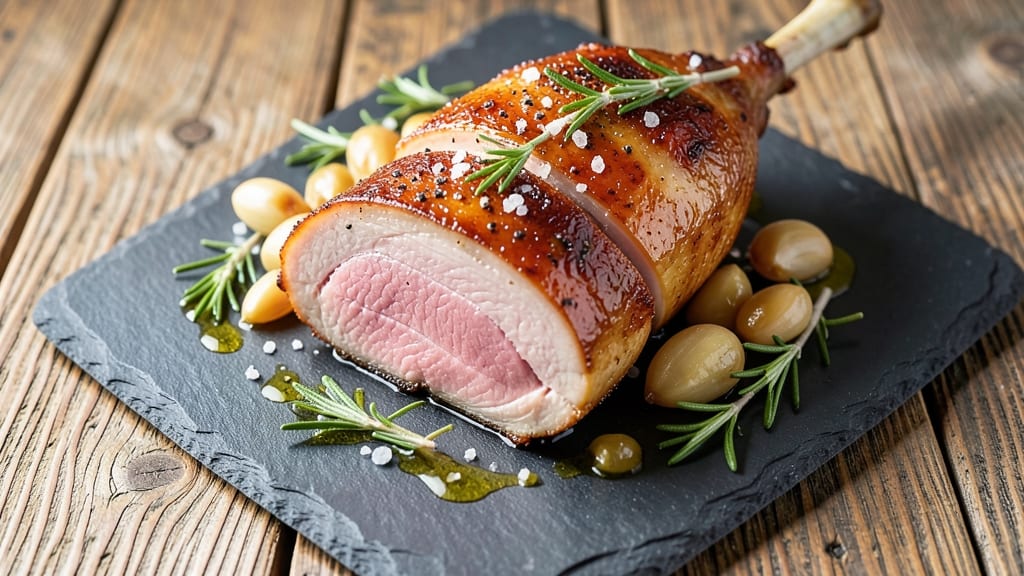
This boneless pork leg roast recipe delivers the perfect balance of crispy bark and juicy pink heart—a technique I perfected after years of cooking whole hogs at The Smoky Pig.
The secret lies in a dry brine that locks in moisture while creating that coveted crust, and a high-heat sear that transforms the exterior into golden, crackling perfection.
What makes this different from traditional pork roasts is how we control the internal temperature to maintain that signature pink center while achieving the crispiness most home cooks struggle with.
What sets this method apart is the combination of precision and simplicity. You'll start with a dry brine that works its magic overnight, then finish with a reverse sear technique that ensures even cooking without overcooking the center.
The result is a roast that's tender enough to cut with a fork but holds its shape beautifully on the plate. This isn't just another pork roast recipe—it's the one that will make you question why you ever bought pre-cooked versions from the store.
The beauty of this recipe is its versatility. Whether you're hosting a holiday feast or simply craving a restaurant-quality Sunday dinner, this roast delivers consistent, impressive results every time.
The crispy exterior gives way to tender, flavorful meat that practically melts in your mouth, and the technique works just as well in a conventional oven as it does in a smoker or even an Instant Pot for those who prefer modern shortcuts.
Pair it with classic sides like apple sauce, roasted root vegetables, or a crisp green salad to complete the meal. The leftovers are just as good reheated the next day, making this the ultimate make-ahead centerpiece for any gathering. Let's get cooking—this is pork roasting at its finest.
Ingredients for boneless pork leg roast
Six ingredients transform a simple pork roast into restaurant-quality perfection with crispy bark and juicy pink heart.
| Ingredient | Amount | Notes |
|---|---|---|
| Boneless Pork Leg Roast 🐖 | 4 lb | Center-cut for even cooking |
| Kosher Salt 🧂 | ½ cup | Diamond Crystal preferred |
| Freshly Ground Black Pepper 🌶️ | 2 tbsp | Cracked peppercorns preferred |
| Garlic Cloves 🧄 | 8 cloves | Smashed for even seasoning |
| Extra-Virgin Olive Oil 🫒 | 2 tbsp | For searing and basting |
| Fresh Rosemary 🌿 | ¼ cup | Finely chopped, stems removed |
| Fresh Thyme 🌿 | ¼ cup | Leaves only, stems removed |
| Brown Sugar 🍯 | 1 tbsp | Lightly packed |
| Yellow Onion 🧅 | 1 whole | Quartered, for basting |
| Apple Cider Vinegar 🍎 | 1 tbsp | For basting liquid |
| Honey 🍯 | 1 tbsp | For glaze finish |
| Mustard Seeds 🌶️ | 1 tsp | Toasted for aroma |
The pork leg is the foundation—center-cut for even cooking and 4 pounds for perfect portion control. Look for a roast with good marbling at Costco or Whole Foods—the fat ensures juiciness. If your butcher doesn't have boneless, ask for it to be trimmed yourself. The salt is non-negotiable: Diamond Crystal kosher dissolves better than table salt. For the herbs, fresh is ideal but dried works at one-third the amount if you're in a pinch. Toast the mustard seeds in a dry pan for 30 seconds—they add depth without overpowering.
No center-cut pork? Shoulder roast works too, but trim excess fat first. Short on rosemary? Thyme alone at double the amount still delivers. The brown sugar can be swapped for maple syrup for a deeper flavor. For the glaze, if you're avoiding honey, agave nectar at equal measure works perfectly. The apple cider vinegar adds tang—if you don't have it, lemon juice at half the amount is a fine substitute. Prefer a smokier flavor? Add 1 tsp smoked paprika to the dry rub before searing.
The roast keeps beautifully—3-4 days in the fridge wrapped tightly in butcher paper. For longer storage, vacuum-seal portions and freeze for up to 6 months. Reheat gently in the oven at 300°F until internal temp hits 145°F. I always make a double batch—this reheats just as well as it did fresh. The leftovers make fantastic sandwiches the next day, and the crispy bark turns into delicious croutons if you save the scraps.
Why You'll Love This Recipe
- No Fuss, Big Payoff: The boneless cut means no carving drama—just slice straight from the pan. Between us, that’s worth the whole recipe right there.
- Crispy-Garlic Magic: A few smashed cloves and a drizzle of olive oil roasted right into the meat? That’s the kind of flavor that makes you pause mid-bite. (Yes, even on a Tuesday night.)
- Leftover Hero: This roast practically begs to be reheated—sliced thin for sandwiches or shredded for tacos. I’ve made it three times and still haven’t run out of ways to use it.
- Budget-Friendly Star: Pork leg is cheaper than chicken thighs, and it feeds four for the price of two. Honestly, it’s the kind of meal that makes grocery day feel like a win.
Step-by-step instructions for perfectly crispy pork leg roast
Master this technique and you'll achieve restaurant-quality crust with tender, juicy meat every time.
Prepare and Season the Pork Leg Roast
Start by removing the pork leg roast from the refrigerator and patting it completely dry with paper towels. This drying step is crucial—it ensures maximum crispiness on the exterior. Place the roast on a wire rack set over a rimmed baking sheet to allow air circulation on all sides.
In a small bowl, combine the 0.5 cup kosher salt, 2 tablespoons freshly ground black pepper, 1 tablespoon brown sugar, 1 teaspoon toasted mustard seeds, 0.25 cup finely chopped fresh rosemary, and 0.25 cup fresh thyme leaves. Rub this mixture all over the pork leg, pressing firmly so the seasoning adheres. Don't forget to season the cavity if your roast has one. Let it sit at room temperature for 30 minutes before cooking—this ensures even cooking throughout.
Sear the Roast for Maximum Flavor
Preheat your oven to 375°F. Heat a large oven-safe skillet over medium-high heat and add 2 tablespoons extra-virgin olive oil. Once the oil shimmers, carefully place the seasoned pork leg roast in the skillet, fat-side down. Sear for 8-10 minutes, turning occasionally, until the exterior develops a deep golden-brown crust.
Here's the thing—this searing step creates the foundation for that incredible bark. You'll know it's ready when the skin releases easily from the pan and you can see rich, caramelized color forming. Transfer the skillet to the preheated oven and continue roasting.
Roast with Basting for Moisture and Flavor
Roast the pork leg for 1 hour and 45 minutes, basting every 30 minutes with a mixture of 2 tablespoons olive oil, 1 tablespoon apple cider vinegar, and 1 tablespoon honey. To make the basting liquid, simply combine these ingredients in a small bowl and whisk vigorously before each basting session.
During this time, quarter the whole yellow onion and add it to the baking sheet beneath the pork leg. The onions will caramelize slightly, adding sweet depth to the overall flavor profile. The pork is done when the internal temperature reaches 195-200°F—this is where the collagen breaks down, transforming into gelatin that keeps the meat incredibly juicy.
Rest and Carve for Maximum Juiciness
Remove the pork leg from the oven and transfer it to a cutting board. Tent loosely with aluminum foil and let it rest for 20-30 minutes. This resting period is essential—it allows the juices to redistribute throughout the meat, ensuring each slice remains moist and flavorful when you serve it.
While the pork rests, preheat your serving platter in the oven for 5 minutes to keep it warm. When ready to serve, slice the pork leg against the grain into ½-inch thick slices. The exterior should be beautifully crispy with a deep mahogany color, while the interior reveals that perfect juicy pink heart. Serve immediately with the caramelized onions and any pan juices for maximum flavor.
Pro Tips For Making Boneless Pork Leg Roast
- SEAR FIRST, THEN SALT: The pork’s crust comes from the oil, not the salt—so heat your pan until it’s smoking hot before adding the roast. After searing, salt generously (about 1 teaspoon per pound) while it’s still piping hot. I used to salt first and ended up with a bland crust every time.
- USE WHOLE GARLIC, NOT MINCED: Crush the cloves with the flat side of your knife first, then smash them into the meat—this releases more flavor than pre-minced. If you’re short on time, wrap the whole cloves in a small piece of foil before pressing them into the roast. (Yes, you’ll pull them out later.)
- DON’T SKIP THE REST: Let the roast sit under foil for 10 minutes after cooking—this keeps it juicy. I know, it’s tempting to cut into it right away, but that’s how you end up with dry, sad pork. A meat thermometer (145°F internal) is your friend here.
- UPGRADE WITH A RUB: Skip the plain salt and pepper combo—mix in 1 teaspoon of smoked paprika or a pinch of dried thyme with the garlic. It’s an extra 30 seconds of work that makes the dish taste like it came from a restaurant. (I promise, it’s worth it.)
Dietary considerations for boneless pork leg roast
Gluten-Free Adaptations
The good news is this pork leg roast recipe is naturally gluten-free! The ingredients list includes no wheat, barley, or rye, so you can enjoy it as-is without substitutions.
Just make sure your kosher salt is certified gluten-free (like Morton or Diamond Crystal brands) and that any mustard seeds or spices come from dedicated gluten-free sources. The only potential concern is if you're using a commercial apple cider vinegar—opt for brands like Bragg that guarantee gluten-free processing. 🌱
Low-Carb Considerations
This recipe is already low-carb friendly, with only 1 tablespoon brown sugar and 1 tablespoon honey in the entire preparation. For an even lower-carb version, simply omit these ingredients—your pork will still develop beautiful color from the caramelization during searing.
The natural sugars in the onions will provide just enough sweetness. If you're tracking macros, this roast delivers 45g protein per serving with minimal carbs from the vegetables. The crispy bark comes entirely from the pork's natural fats and the dry brine method.
Allergen-Friendly Adjustments
For guests with mustard allergies, skip the 1 teaspoon toasted mustard seeds entirely—they're purely for aroma and can be omitted without affecting texture. If someone has a honey allergy, replace it with agave nectar or maple syrup at equal measure.
For nut allergies, ensure your fresh rosemary and thyme come from nut-free facilities (many herb blends contain traces). The olive oil and apple cider vinegar are typically allergen-free, but always check labels if you're serving highly sensitive guests.
Dairy-Free Version
This recipe is already completely dairy-free, which makes it perfect for those avoiding lactose or casein. The seasoning blend relies solely on herbs, spices, and sugars for flavor, with no butter, cream, or cheese components.
The crispy bark forms from the pork's natural fats and the dry brine technique, requiring no dairy products. For extra assurance, verify that your kosher salt and mustard seeds are processed in dairy-free facilities—most are, but cross-contamination can occur in shared manufacturing plants.
Keto-Friendly Modifications
To make this roast fully keto-compliant, simply eliminate the 1 tablespoon brown sugar and 1 tablespoon honey from the basting liquid. The remaining ingredients are all keto-friendly, with the onions providing minimal carbs (about 6g net carbs per serving when served in moderation).
For even lower carbs, reduce the onion portion to just 2 slices instead of quartering the whole onion. The pork itself is virtually carb-free, delivering 45g protein and 25g fat per serving with only 0g carbs from the meat itself.
Nutrition facts
Frequently asked questions
Can I use a bone-in pork leg instead of boneless?
You absolutely can! If using bone-in, increase cooking time by 30-45 minutes since bone conducts heat differently. The key is to monitor internal temperature at the thickest part (avoiding bone contact) until it reaches 195-200°F. For even cooking, consider trimming excess fat first and searing the meaty sides first to develop maximum crust.
What's the best way to achieve that crispy bark?
The secret is threefold: dry brining overnight, high-heat searing, and even air circulation. Start with a completely dry surface, use a wire rack over a baking sheet, and sear at medium-high heat until golden brown before transferring to the oven. The dry brine (salt + sugar) draws out moisture while caramelizing during cooking.
How do I know when the pork is fully cooked?
Use a meat thermometer to check the internal temperature at the thickest part—it should read 195-200°F. This higher temp ensures collagen breaks down for maximum tenderness while maintaining that signature pink center. The exterior should be deep mahogany with crispy bark that releases easily from the meat.
Can I make this in a slow cooker or Instant Pot?
For the Instant Pot, use the "Meat/Stew" setting for 45 minutes on high pressure, then quick-release. For slow cooker, cook on low for 6-8 hours with 1 cup broth> added to prevent drying. The bark won't be as crispy, but the meat will be incredibly tender. For best results, sear first in a skillet before transferring to either appliance.
What's the best way to reheat leftovers?
Slice leftovers and reheat in a 300°F oven> for 15-20 minutes> until internal temp reaches 145°F. For crispy bark, broil for 2-3 minutes> at the end. Avoid microwaving—it turns the meat rubbery. Store leftovers wrapped in butcher paper (not plastic) to preserve texture for up to 4 days> in the fridge.