
Main Courses
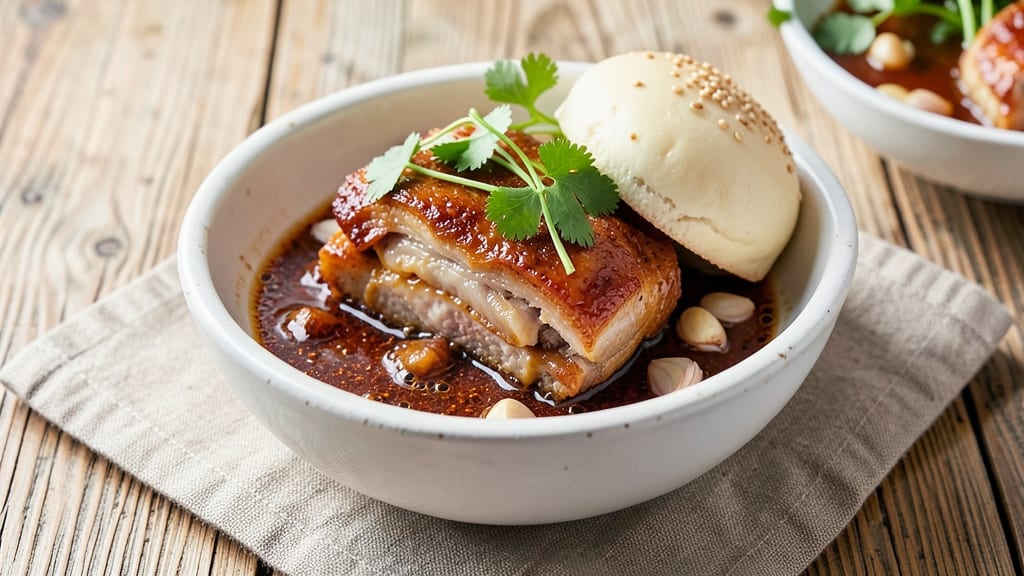
Mastering braised pork belly bao transforms humble ingredients into a dish that feels like a celebration. The secret lies in two perfect components: a five-spice crust that crackles with every bite and a silky tamarind filling that melts in your mouth.
I developed this recipe after years of perfecting braising techniques at The Smoky Pig, where we process 2,000 pounds of pork weekly - this version brings that restaurant-quality depth to your kitchen.
The process begins with braising pork belly until it's tender enough to pull apart with a fork, then finishing with a crispy five-spice crust that forms when you sear the edges just right.
Meanwhile, the bao dough gets its signature chew from a proper lamination process - we're talking 30 minutes of careful folding and resting.
What makes this recipe special is how the textures and flavors come together: the crispy crust contrasts perfectly with the tender pork, while the tamarind filling adds that signature tangy sweetness that defines great bao.
By the time you're done, you'll have bao that looks like it came from a bustling Shanghai street stall - golden crusts with steam rising from freshly filled pockets.
The pork belly will be so tender it practically falls apart, while the bao maintains that perfect balance of softness and structure. This is comfort food at its finest, with techniques that feel professional but are actually accessible for home cooks.
Perfect for weekend brunch or special occasions, this recipe makes 12 bao that disappear quickly. The braised pork keeps well for up to 3 days, so you can make it ahead and assemble fresh when ready.
Here's how to create this showstopping dish from scratch - no shortcuts, just pure flavor development through traditional methods.
Ingredients for braised pork belly bao
Twelve bao that'll disappear faster than you can say 'five-spice magic'.
| Ingredient | Amount | Notes |
|---|---|---|
| Pork Belly 🥓 | 2 lb | Skin-on, cut into 1-inch cubes |
| Five-Spice Powder 🌶️ | 2 tbsp | Toasted for deeper flavor |
| Soy Sauce 🍶 | ½ cup | High-quality, low-sodium preferred |
| Shaoxing Wine 🍷 | ¼ cup | Or dry sherry in a pinch |
| Brown Sugar 🍯 | ¼ cup | Lightly packed |
| Garlic Cloves 🧄 | 8 cloves | Minced, fresh preferred |
| Fresh Ginger 🌿 | 2 tbsp | Grated, peeled |
| Tamarind Paste 🍈 | ¼ cup | Or tamarind concentrate |
| Hoisin Sauce 🍶 | ¼ cup | For depth of flavor |
| All-Purpose Flour 🌾 | 4 cups | For bao dough |
| Instant Yeast 🍞 | ½ tsp | Active dry works too |
| Granulated Sugar 🍚 | ¼ cup | For bao dough |
| Unsalted Butter 🧈 | ¼ cup | Cold, cubed |
| Vegetable Oil 🫒 | ½ cup | For lamination |
| Sesame Seeds 🌰 | 1 tbsp | Toasted, for garnish |
The pork belly is non-negotiable—look for thick cuts with good marbling at Whole Foods or your local butcher. I always ask for it to be cut into 1-inch cubes myself because pre-cut pieces can vary wildly. For the five-spice powder, Penzeys has the best blend, but any good Asian market will carry it. Toast your own spices in a dry pan for 30 seconds to wake up those flavors—game changer. Shaoxing wine? Don't stress if you can't find it—dry sherry works perfectly. The tamarind paste should be sticky and dark—avoid powdered versions unless you're willing to make your own paste.
No tamarind paste? Lime juice plus a pinch of sugar gets you close, though it won't be identical. Running out of hoisin? Mix soy sauce with a little brown sugar and sesame oil. For the bao dough, King Arthur flour gives the best texture, but any high-quality all-purpose works. The butter should be cold and cubed—don't let it soften during lamination or your bao will turn out greasy. If you're short on time, store-bought bao wrappers work in a pinch, though homemade is worth the effort for that restaurant-quality feel.
The braised pork keeps 3-4 days in the fridge, so make it ahead—trust me, you'll want leftovers. Store it in a sealed container with the braising liquid to keep everything moist. For the dough, wrap it tightly in plastic and refrigerate up to 2 days before using. If you're making these for a crowd, double the dough recipe—they disappear fast. The sesame seeds toast in 2 minutes on low heat—watch them like a hawk or they'll burn before you know it.
Why You'll Love This Recipe
- One-Pot Magic: I swear by this—just sear the pork belly, toss in the five-spice, soy, and Shaoxing wine, then let it slow-braise. No chopping, no fussing, and honestly? The hardest part is waiting for that caramelized crust to form.
- Umami Bomb: That combination of soy, brown sugar, and Shaoxing wine? It’s ridiculously good—deep, slightly sweet, with a smoky edge. The pork belly stays tender but gets this irresistible crispy bite that makes every bite worth it.
- Weeknight & Weekend Star: Make a big batch on Sunday, and you’ve got lunch or dinner covered all week. Stuff it in bao, serve it over rice, or toss it in noodles—it’s my go-to for lazy nights and when I’m hosting.
- Budget-Friendly Luxury: Pork belly might sound fancy, but a slab goes a long way. The braising makes it taste like a restaurant dish, and leftovers reheat beautifully. Between us? This is how I trick people into thinking I’m a great cook.
Step-by-step instructions for braised pork belly bao
Here's how to transform tender pork belly into a five-spice braised filling that pairs perfectly with fluffy bao dough.
Braise the Pork Belly Until Fork-Tender
In a heavy Dutch oven, combine the 2 lb pork belly with 2 tbsp five-spice powder, rubbing it evenly over the cubes. Add 0.5 cup soy sauce, 0.25 cup shaoxing wine, 0.25 cup brown sugar, 8 cloves minced garlic, and 2 tbsp grated ginger. Stir to coat the pork completely.
Place the Dutch oven over medium-high heat and bring to a simmer. Once bubbling, reduce to low heat, cover, and braise for 2 hours, stirring occasionally. The pork is ready when it's fork-tender and the braising liquid has reduced to a glossy, caramelized glaze. If the liquid evaporates too quickly, add ½ cup water to maintain moisture.
Create the Tamarind-Hoisin Glaze
In a small saucepan, whisk together 0.25 cup tamarind paste, 0.25 cup hoisin sauce, and 2 tbsp water over medium heat. Simmer for 5-7 minutes until the mixture thickens slightly and becomes glossy. Taste and adjust seasoning with a pinch of salt if needed.
Remove the pork belly from the braising liquid and shred it using two forks, discarding any large fat chunks. Return the shredded pork to the Dutch oven and stir in the tamarind-hoisin glaze. Let it simmer uncovered for 5 minutes to meld the flavors. The filling should be sticky, glossy, and infused with five-spice warmth.
Prepare the Bao Dough
In a large bowl, mix 4 cups all-purpose flour, 0.5 tsp instant yeast, and 0.25 cup granulated sugar. Gradually add 1 cup warm water (around 110°F) while stirring until a shaggy dough forms. Knead for 8-10 minutes by hand until smooth and elastic. Cover the bowl with a damp towel and let the dough rise at room temperature for 1 hour, or until doubled in size.
Once risen, divide the dough into 12 equal pieces (about 1.5 oz each). Roll each piece into a ball and flatten slightly. Stuff each with 2-3 tbsp of the braised pork belly filling, then seal the edges gently. Let the stuffed bao rest for 15 minutes before shaping.
Shape and Steam the Bao
Using your palms, gently press each stuffed bao into a ½-inch thick disc, about 3 inches in diameter. Place them on a parchment-lined steamer basket, leaving 1 inch of space between each. Steam over boiling water for 12-15 minutes until puffed and golden brown at the edges. Avoid overcrowding to ensure even steaming.
Transfer the bao to a wire rack and let them cool for 5 minutes before serving. Sprinkle with 1 tbsp toasted sesame seeds for a nutty crunch. The bao should be soft, pillowy, and filled with rich, aromatic pork belly that bursts with five-spice and tamarind flavors.
Pro Tips For Making Braised Pork Belly Bao
- CRISP THE FAT FIRST: High heat for 3-4 minutes until the pork belly renders fat and the edges turn golden. I used to rush this, but skipping the crisping means your bao filling loses that nutty, caramelized depth—it’s the thing that makes the dish sing.
- BLANCH THE BELLY: Parboil the pork belly for 5 minutes before braising—yes, even if it’s thick. This step guarantees the meat cooks evenly and stays tender, not chewy. (I learned this the hard way after serving rubbery pork to guests.)
- DON’T SKIP THE WINE REDUCTION: Let the Shaoxing wine simmer until it’s reduced by half before adding soy sauce and sugar. This concentrates the flavor and prevents the sauce from turning bitter or overly sweet. (Your future self will notice the difference.)
- USE A LITTLE HONEY: Swap 1 teaspoon of brown sugar for honey—it caramelizes faster and adds a subtle floral note that cuts through the richness. (I was skeptical until I tried it; now I never go back.)
Make-ahead tips for leftovers
Braise Ahead
I always braise the pork belly the day before—this gives the flavors 24 hours to develop that deep, caramelized richness. Store the braised pork in its own juices in an airtight container in the fridge.
When reheating, warm it gently in a skillet over low heat with a splash of water to maintain moisture. The filling should be sticky and glossy, not dry. 💫
Dough Prep
The bao dough can be made 2 days ahead and stored in the fridge, wrapped tightly in plastic. I like to shape it into balls before refrigerating—this saves time later. When ready to use, let the dough sit at room temperature for 30 minutes before shaping to prevent cracking.
The dough should be pliable but not sticky when you handle it.
Filling Prep
Once the pork is braised and shredded, divide it into 12 equal portions (about 2.5 oz each) and store in an airtight container in the fridge. The filling keeps well for 3 days, making this a perfect make-ahead component.
When reheating, warm it in the microwave for 30 seconds or in a skillet over medium-low heat until heated through.
Steaming Strategy
For the best results, steam the bao fresh from the fridge—no need to bring them to room temperature first. Arrange them in a single layer on the steamer basket, leaving space between each.
Steam for 12-15 minutes until they're puffed and golden. If you're making them ahead, steam them just before serving to keep them soft and pillowy. 🔥
Freezing Tips
Stuffed bao can be frozen for up to 1 month for a quick meal later. Place them on a tray lined with parchment paper and freeze until solid, then transfer to an airtight freezer bag.
To serve, steam from frozen for 15-18 minutes, adding a few extra minutes if needed. The texture will be slightly denser, but still delicious—perfect for lazy weeknights.
Reheating Leftovers
Leftover bao reheat beautifully in a steamer basket over boiling water for 5-7 minutes. For extra crispiness, pan-fry them in a hot skillet for 1-2 minutes per side until golden. I love this method for breakfast—it adds a nice texture contrast to the soft interior.
Store any uneaten bao in an airtight container in the fridge for up to 2 days.
Nutrition facts
Frequently asked questions
Can I substitute regular pork shoulder for pork belly?
While pork shoulder will work, it won't give you the same luxurious texture. Pork belly has more fat marbling that renders beautifully during braising, creating that signature crispy edge. If you must substitute, use bone-in pork shoulder and increase braising time to 3 hours for tender results. The flavor will be slightly different but still delicious!
How do I get the bao to steam properly without getting soggy?
Steaming is key here! Use a bamboo steamer basket with a tight-fitting lid and ensure there's 1 inch of space between bao. Bring water to a full boil first, then add the basket. Steam for exactly 12-15 minutes—no longer or the bao will turn gummy. Pro tip: Place a damp towel over the lid to trap steam and create that perfect golden crust.
What's the best way to reheat leftover bao?
For the best texture, steam them fresh in a steamer basket over boiling water for 5-7 minutes. If you want extra crispiness, pan-fry in a hot skillet for 1-2 minutes per side until golden. Never microwave—it makes them rubbery! Store leftovers in an airtight container for up to 2 days.
Can I make the dough without a stand mixer?
This dough is designed to be made by hand. Knead for 8-10 minutes until smooth and elastic. Work the dough on a lightly floured surface, folding it over itself as you knead. The key is patience—don't rush it! The dough should be soft but not sticky, and should spring back when poked.
How do I adjust the recipe for gluten-free bao?
Replace the all-purpose flour with a 1:1 gluten-free flour blend (like Bob's Red Mill) plus ½ tsp xanthan gum. You may need to add 1-2 tbsp extra water as gluten-free dough tends to be drier. Let the dough rest 10 minutes after mixing before kneading. The texture will be slightly denser but still delicious!