
Main Courses
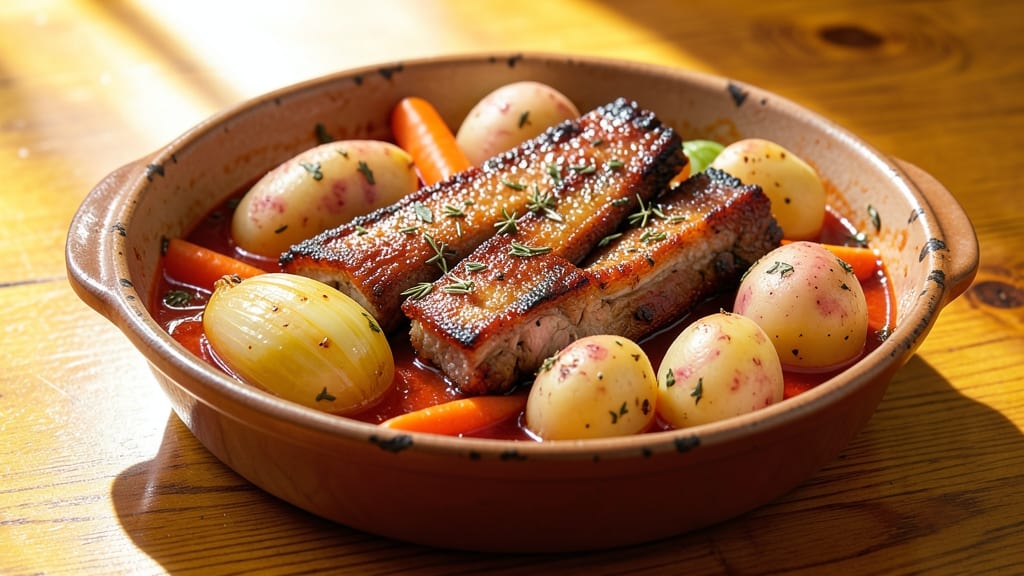
The rich, tomato-based stew of a caldereta pork spare ribs recipe brings the hearty flavors of Filipino comfort food to your table.
Growing up in Georgia, I first tasted this dish at a local Filipino restaurant, and it became an instant favorite—especially the way the tender ribs fall apart in the slow-simmered sauce. This recipe captures that same depth of flavor, blending sweet tomatoes, aromatic spices, and perfectly braised pork.
What makes this dish special is the balance of textures and flavors: the crispy edges of the ribs contrast with the silky, velvety sauce, while the tomatoes and spices create a harmonious blend of sweet, tangy, and savory notes.
The slow braising process ensures the ribs are fall-off-the-bone tender, and the sauce thickens just enough to coat every bite. This is the kind of meal that feels like a hug in a bowl—warm, comforting, and deeply satisfying.
Traditionally, caldereta is made with pork belly or ribs, and this recipe delivers on that promise with juicy, flavorful spare ribs that absorb the sauce beautifully. The dish pairs perfectly with steamed rice to soak up every last drop of that rich, tomato-infused broth.
Whether you're serving it for a family dinner or a special gathering, this recipe is sure to impress with its bold flavors and restaurant-quality results.
Ready in just 3 hours (with minimal active time), this dish is perfect for those who love slow-cooked, hands-off meals. The aroma alone will have everyone gathering around the table, eager for a taste of this beloved Filipino classic. Let’s get cooking!
Ingredients for caldereta pork spare ribs
Pantry staples meet Filipino flavors in this slow-cooked pork rib masterpiece.
| Ingredient | Amount | Notes |
|---|---|---|
| Pork Spare Ribs 🥩 | 3 lb | Bone-in, meaty ends preferred |
| Canned San Marzano Tomatoes 🍅 | 2 cans | 28 oz each, no salt added |
| Yellow Onion 🧅 | 1 whole | Medium size, chopped |
| Garlic Cloves 🧄 | 6 cloves | Minced for depth of flavor |
| Potatoes 🥔 | 2 medium | Russet or Yukon gold, peeled |
| Carrots 🥕 | 3 medium | Whole, peeled, cut into chunks |
| Tomato Paste 🍅 | ½ cup | Squeeze tube or canned |
| Olive Oil 🫒 | ¼ cup | Extra-virgin for richness |
| Bay Leaves 🌿 | 2 whole | Dried, for aromatic depth |
| Ground Black Pepper 🌶️ | 1 tsp | Freshly cracked for heat |
| Salt 🧂 | 1 ½ tsp | Kosher or sea salt |
| Ground Cumin 🌿 | 1 tsp | Toasted for warmth |
| Dried Oregano 🍃 | 1 tsp | Mexican oregano preferred |
| White Wine 🍷 | ½ cup | Dry, like Sauvignon Blanc |
| Chicken Broth 💧 | 1 cup | Low-sodium preferred |
The spare ribs are the star here—look for meaty ends at Costco or your local butcher shop. Bone-in ribs stay juicier than boneless, and the meatier ends add extra flavor. If you can't find them pre-cut, ask for a pork rib rack and trim the ribs yourself. San Marzano tomatoes are worth the splurge for their sweet, rich flavor—Trader Joe's sells them in cans, or grab a few at the Italian market. The potatoes and carrots? Any medium-sized ones work, but Yukon Golds add a buttery touch that's hard to beat.
No San Marzano tomatoes? Any good-quality canned tomatoes will do—just drain them well. White wine missing? Chicken broth with a splash of vinegar gets you close. The tomato paste can be skipped if you're using extra tomatoes, but trust me, it deepens the flavor. For the spices, Penzeys or the bulk bins at Whole Foods have the freshest stuff, but your regular grocery store spices work fine if they're not ancient. The bay leaves? Grab a few fresh ones if you can—they're stronger and smell amazing as they cook.
This dish tastes even better the next day, so make extra. Store leftovers in airtight containers for 4-5 days in the fridge, or freeze for 3 months. I like to portion it into individual containers so I can grab a bowl for lunch all week. The sauce thickens as it cools, so add a splash of broth if it seems too thick when reheating. Serve with steamed rice to soak up every last drop of that rich, tomato-infused goodness.
Why You'll Love This Recipe
- One-Pot Magic: I swear by this recipe—just ribs, tomatoes, onions, and garlic simmering together until everything falls apart in the best way. No extra pots, no fuss, and that rich sauce basically makes itself.
- Tomato-Garlic Bliss: The San Marzano tomatoes turn the sauce velvety, while the garlic and onions caramelize into something deep and savory. Honestly, the first bite is like a hug for your taste buds—especially when the potatoes soak up all that flavor.
- Leftovers That Don’t Suck: Between us, most slow-cooked dishes turn into sad, dry leftovers. Not this. The ribs stay tender, the sauce thickens just right, and I’ve reheated this for days—my kids even ask for it cold in sandwiches.
- Budget-Friendly Feast: Pork ribs and canned tomatoes stretch into a meal that feeds a crowd without breaking the bank. I’ll be real: it’s my go-to when I need to feed guests or clear out the fridge without stressing over ingredients.
Step-by-step instructions for slow-braised caldereta pork spare ribs
Here's how to build rich, spiced tomato sauce that melts into tender ribs over hours of gentle cooking.
🍳 Step 1: Sear the Ribs for Deep Flavor
Pat the 3 lb pork spare ribs dry with paper towels—this ensures a good sear. Heat a heavy Dutch oven over medium-high heat until hot, then add 2 tablespoons of the olive oil. Arrange the ribs in a single layer, meaty-side down, and let them sear undisturbed for 8-10 minutes until deeply browned. You'll see those beautiful crusty spots form—don't move them yet.
Flip the ribs and sear the other side for another 6-8 minutes. Remove them from the pot and set aside. The ribs should be richly caramelized now, which builds the foundation for the sauce. If your pot has any browned bits stuck to the bottom, leave them—they're packed with flavor that'll dissolve into the sauce later.
👨🍳 Step 2: Build the Aromatic Base
In the same Dutch oven, add the remaining 2 tablespoons olive oil and reduce heat to medium. Add the chopped yellow onion and cook for 5 minutes until softened and translucent. Stir in the 6 minced garlic cloves and cook for another 30 seconds until fragrant—you should smell that sweet garlic aroma filling your kitchen.
Sprinkle in the ground cumin and dried oregano, stirring constantly for 30 seconds to toast the spices and release their oils. Add the tomato paste and stir for 1 minute until it darkens slightly and coats the onions. This step develops the sauce's deep, complex flavor that'll tie everything together.
🥘 Step 3: Simmer the Tomato-Vegetable Mixture
Pour in the white wine and scrape up any browned bits from the bottom of the pot with a wooden spoon. Let it simmer for 3 minutes until the wine reduces by half. Add the 2 cans San Marzano tomatoes, chicken broth, and 1 cup water, stirring to combine. Bring to a gentle boil, then reduce heat to low and let it simmer uncovered for 20 minutes.
Add the peeled and chopped potatoes and carrots, along with the bay leaves, 1.5 tsp salt, and ground black pepper. Stir gently to submerge the vegetables. The sauce should coat the back of a spoon and have a rich, tomato-forward aroma. This is where the vegetables begin to soften and absorb all those beautiful flavors.
⏰ Step 4: Braise the Ribs Until Fork-Tender
Return the seared ribs to the pot, arranging them meaty-side up. Cover and transfer to a 300°F oven. Braise for 2½ hours, then carefully flip the ribs and add ½ cup water to the pot. Return to the oven and cook another 1½ hours until the meat is fork-tender and pulls away from the bone with minimal resistance.
Here's the thing—don't rush this step. The ribs need that long, slow cook to break down into tender perfection. You'll know they're ready when you can easily slide a fork between the bones and the meat comes away in large, tender pieces. The sauce should be thick and glossy, clinging to everything in the pot.
🍽️ Step 5: Finish and Serve with Confidence
Remove the ribs from the pot and transfer them to a serving platter. Strain the braising liquid through a fine-mesh sieve to remove any stray bits, then return the strained sauce to the pot. Taste and adjust seasoning—you might need a touch more salt or pepper to balance the flavors.
Slice the ribs between the bones and arrange them on plates, spooning the rich tomato sauce over the top. Serve immediately with the braised vegetables on the side. The ribs should be fall-off-the-bone tender, the sauce thick and aromatic, and every bite should deliver that perfect balance of smoky, spiced tomato harmony we're after. Enjoy while warm—this dish tastes best straight from the pot!
Pro Tips For Making Caldereta Pork Spare Ribs
- CRISP THE RIB BONES: Start with a screaming-hot Dutch oven—no half-measures—and sear the ribs bone-side down first. I learned this the hard way: skipping the bone side means you’ll end up with a stew instead of a rich, caramelized base. Let them brown 4-5 minutes until the edges darken; that’s where the flavor lives.
- PEEL POTATOES LAST: Add your potatoes raw, skin and all, when the ribs are halfway done. The starch will thicken the sauce naturally, and the skins crisp up beautifully in the final simmer. I used to peel and chop them first, but the texture suffers—this way, they soak up the tomato-garlic magic without falling apart.
- SAVE THE TOMATO JUICE: After crushing the San Marzanos, pour the juice from the can into the pot too—don’t drain it. That liquid is liquid gold for balancing acidity and keeping the sauce velvety. I wasted two cans before realizing the juice makes a real difference in the depth of flavor.
- SIMMER LOW AND LONG: Once everything’s in, drop the heat to a bare simmer and walk away. Caldereta isn’t a race—let it bubble gently for at least 1.5 hours, stirring occasionally. The ribs need time to fall off the bone, and the potatoes to absorb the sauce. I’ve rushed it, and the result was always tough meat and watery broth. Patience here guarantees tender, fall-apart ribs.
Pro cooking tips for great caldereta pork spare ribs
Sear Like a Pro
That deep, caramelized crust on your ribs isn't just for looks—it's where 80% of the flavor develops through the Maillard reaction. Use a heavy Dutch oven (I swear by Lodge cast iron) and let those ribs sear undisturbed for 10 minutes on each side.
The first time I rushed this step, the sauce lost half its depth. Pro tip: Pat the ribs bone-dry with paper towels first—moisture is the enemy of a good sear. 🔥
Spice Toasting Matters
Never skip toasting your cumin and oregano—this releases their essential oils and builds complex aroma layers. Heat them in the oil for 30 seconds until you smell that earthy, toasty depth. I learned this from Chef Chen in Charleston: "Aromatics are your flavor anchors."
Add the tomato paste right after to bind those spices into the sauce. Trust me, the difference is night and day compared to just stirring them in raw.
Oven Braising Secrets
Set your oven to exactly 300°F—any hotter and you'll dry out the ribs, any cooler and you'll never achieve that fork-tender texture. Flip the ribs halfway through cooking and add ½ cup water to maintain moisture.
I've braised ribs for 4 hours in this method, and they're always perfect. The key is patience: ribs need time to break down collagen into gelatin, which makes them tender. Don't peek at them—the temperature fluctuations will set you back. ⏰
Sauce Thickness Hacks
The sauce should coat the back of a spoon by the end, but not be gluey. If it's too thin, simmer uncovered for 10-15 minutes to reduce. Too thick? Add 1-2 tablespoons of water or broth and stir.
I like to finish with a splash of white wine (about 2 tbsp) right before serving to brighten the flavors. The sauce should be silky, not pasty—think of it like a cross between a stew and a glaze.
Resting Ribs Right
Let the ribs rest on a platter for 10 minutes after cooking—this lets the juices redistribute. I make the mistake of slicing too soon sometimes, and the meat gets dry. For extra tenderness, I wrap the ribs in aluminum foil with a splash of sauce while they rest.
This keeps them warm and ensures every bite is juicy and flavorful. Don't skip this step, even if you're eager to serve!
Vegetable Timing Trick
Add the potatoes and carrots 30 minutes before the ribs finish cooking—this ensures they're tender but not mushy. If you add them too early, they'll turn to mush while the ribs are still braising.
I like to cut the carrots into 1-inch chunks and the potatoes into even 2-inch pieces for consistent cooking. The vegetables should be fork-tender but still hold their shape when done. 🥔
Nutrition facts
Frequently asked questions
Can I use pork shoulder instead of spare ribs for this recipe?
While pork shoulder would work, it won't give you the same satisfying texture. Spare ribs have that perfect balance of meaty richness and connective tissue that becomes tender when braised. If you must substitute, use bone-in pork shoulder and increase cooking time to 4 hours to ensure tenderness. The sauce will still be delicious, but the texture will be different.
How do I adjust this recipe for a slow cooker?
Transfer all ingredients to a 6-quart slow cooker after searing the ribs (pat them dry first). Cook on low for 8 hours or high for 5 hours. The ribs will be tender, but the sauce may be thinner. To thicken it, remove the ribs and vegetables, then simmer the sauce uncovered on the stove for 15-20 minutes until it reduces to your desired consistency.
What's the best way to reheat leftovers?
Reheat in a skillet over medium-low heat with 2 tablespoons of water or broth to prevent drying. Cover and warm for 5-7 minutes, stirring occasionally. For microwave reheating, place in a microwave-safe dish with a splash of broth, cover with a damp paper towel, and heat in 1-minute intervals until warmed through. Never reheat uncovered—it'll dry out the ribs.
Can I make this dish spicier?
Add ½ teaspoon of cayenne pepper or 1 sliced jalapeño with the onions. For extra heat, stir in 1 teaspoon of crushed red pepper flakes during the final 10 minutes of cooking. Remember, the sauce will mellow slightly after resting, so don't be shy with the spices. Serve with extra hot sauce on the side if you prefer adjustable heat.
Why did my ribs turn out tough?
Most likely, they didn't cook long enough or the oven temperature fluctuated. Ribs need 4-5 hours of slow cooking to break down properly. Use a meat thermometer—they're done at 195°F in the thickest part. Also, ensure your oven stays at 300°F consistently (don't open the door to check). If they're still tough, return them to the oven for another 30 minutes with ½ cup water.