
Main Courses
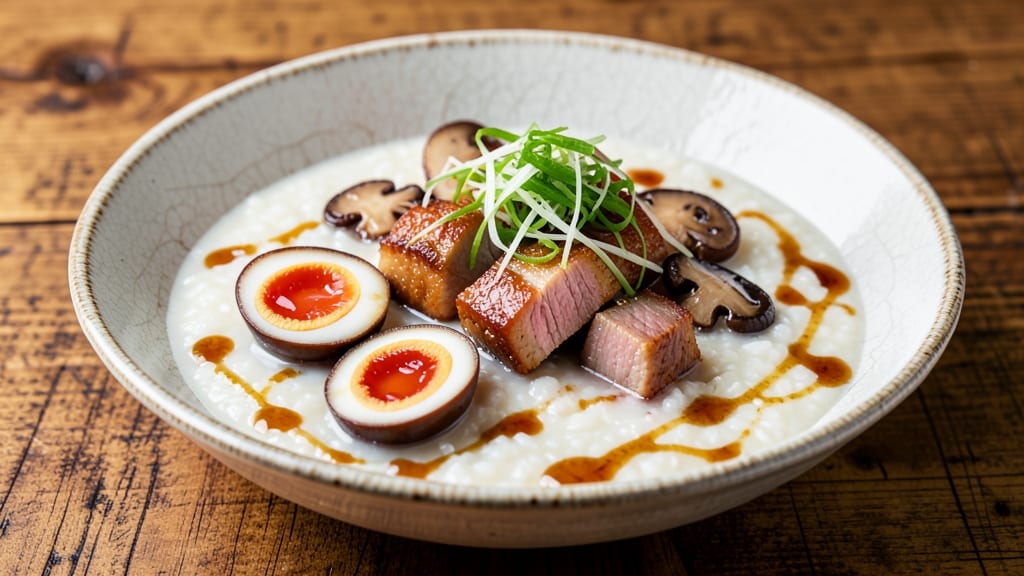
This century egg and pork congee recipe delivers the perfect balance of silky porridge and bold umami flavors that define Chinese comfort food.
The secret lies in the century eggs—preserved for months to develop their signature dark shells and creamy, jade-green yolks—paired with tender pork that transforms into melt-in-your-mouth bites as it simmers.
I first encountered this dish in Charleston’s Chinatown, where it became a staple for late-night cravings after long shifts at the restaurant.
The foundation of great congee is patience—slow-cooking rice until it dissolves into a velvety broth while keeping the pork perfectly tender. Century eggs add a unique texture and depth of flavor, with their salty, savory yolks cutting through the richness.
What makes this dish truly special is how each component plays off the others: the chewy pork, the delicate congee, and the intense umami of the century eggs create a harmony that’s both comforting and sophisticated.
By the time you finish this recipe, you’ll have a bowl of congee that’s restaurant-quality at home—silky smooth with pockets of tender pork and bursts of century egg yolk in every spoonful.
The aroma alone will transport you to a bustling Chinese kitchen, where this dish has been a staple for generations. Garnish with fresh scallions or a drizzle of chili oil for that final touch of authenticity.
This isn’t just a recipe; it’s an experience that connects you to centuries of culinary tradition. Whether you’re serving it as a light meal or a hearty breakfast, the balance of textures and flavors makes it unforgettable.
Let’s get started on creating a dish that’s as much about technique as it is about taste.
Ingredients for century egg and pork congee
Four century eggs and tender pork belly transform into a velvety porridge with layers of umami.
| Ingredient | Amount | Notes |
|---|---|---|
| Century Eggs 🥚 | 4 whole | Dark shells, jade-green yolks |
| Pork Belly 🐖 | 1 lb | Skin-on, cut into 1-inch cubes |
| Jasmine Rice 🌾 | 1 cup | Uncooked, long-grain preferred |
| Dried Shiitake Mushrooms 🍄 | 4 whole | Rehydrated for umami depth |
| Dried Scallions 🧅 | 2 tbsp | For garnish and flavor |
| Light Soy Sauce 🥄 | 2 tbsp | For seasoning |
| Dark Soy Sauce 🥄 | 1 tbsp | For color and richness |
| Sesame Oil 🫒 | 1 tbsp | Toasted for aroma |
| Dried Ginger 🌿 | 1 tsp | Toasted for warmth |
| Water 💧 | 8 cups | Filtered preferred |
| Chili Oil 🌶️ | 1 tbsp | For garnish (optional) |
| Salt 🧂 | 1 tsp | Adjust to taste |
Century eggs are the star here—look for dark, wrinkled shells and that signature jade-green yolk when shopping. Charleston’s Chinatown has the best Asian markets if you're local, but any well-stocked grocery store with a Chinese section should carry them. The pork belly should have good marbling—ask the butcher to cut it into 1-inch cubes for even cooking. Dried shiitake mushrooms? Trader Joe's sells them pre-packaged, but bulk bins at Asian markets are cheaper. Soak the mushrooms in hot water for 20 minutes before using—they’ll triple in size and pack serious flavor. Fresh ginger is ideal, but dried works in a pinch (just toast it first for extra aroma).
No century eggs? Preserved duck eggs work in a pinch, though the flavor won’t be identical. Running low on pork belly? Pork shoulder or even chicken thighs can substitute, but pork gives that signature melt-in-your-mouth texture. The soy sauces are non-negotiable—light soy for seasoning, dark soy for that rich, caramelized color. No sesame oil? Toasted peanut oil adds a similar nutty depth. The dried scallions can be swapped for green onions, but fresh ones lose their punch after drying. For extra umami, add a splash of fish sauce (if vegetarian, use soy sauce instead).
This congee tastes even better the next day—make a double batch and store leftovers in the fridge for up to 4 days. The rice keeps for 3 days cooked, but the pork and century eggs are best used within 2 days. To reheat, just warm gently on low heat with a splash of water. For serving, garnish with fresh scallions and chili oil right before eating—the heat cuts through the richness. Freezes beautifully too, though the texture gets slightly gummier after thawing. Portion into containers for easy lunches all week.
Why You'll Love This Recipe
- One-Pot Wonder: Honestly, this congee is my go-to when I’m too tired to chop much—just slice the pork belly thin, soak the mushrooms and scallions, and toss everything into the pot. The rice handles all the work while you sip tea and pretend you’re not cooking.
- Umami Bomb: Between us, that century egg—creamy, salty, with that just-right funk—transforms this dish. Pair it with the deep, meaty pork belly and chewy shiitakes, and suddenly you’ve got a bowl that tastes like a hug from your favorite grandmother (the good kind, not the one who criticizes your chopping).
- Weeknight to Weekend: I make this for lazy Mondays, but it also stars at my holiday table—just add a fried egg on top for fancy points. The leftovers? Even better the next day, because the flavors meld into pure, comforting goodness (and yes, it reheats beautifully).
- Budget Magic: Pork belly might sound fancy, but a little goes a long way—this recipe feeds four for under $10, and the dried mushrooms/scallions stretch my grocery budget further. Plus, century eggs last forever in the fridge, so I’m never scrambling for last-minute ingredients.
Step-by-step instructions for century egg and pork congee
This silky porridge delivers rich umami and comforting texture—let's build it layer by layer.
Prepare the Pork Belly and Shiitake Mushrooms
Cut the 1 lb pork belly into 1-inch cubes and place them in a pot with 8 cups water. Bring to a boil over medium-high heat, then reduce to a simmer for 45 minutes until the pork is tender and the fat begins to render. Skim off any foam that rises to the surface during this time.
While the pork cooks, soak the 4 whole dried shiitake mushrooms in a separate bowl of hot water for 20 minutes until they're fully rehydrated. Drain and finely chop them, reserving ½ cup of the soaking liquid. These mushrooms will infuse your congee with deep umami flavor that pairs perfectly with the century eggs.
Cook the Jasmine Rice to Porridge Consistency
Add the 1 cup jasmine rice to the simmering pork broth. Stir once to prevent sticking, then cover and cook on low heat for 40 minutes, stirring occasionally. You're aiming for a silky, creamy texture—think of it like a thick oatmeal rather than a firm rice dish.
After 30 minutes, add the chopped shiitake mushrooms and the reserved ½ cup soaking liquid. Stir in the 2 tbsp light soy sauce, 1 tbsp dark soy sauce, and 1 tsp salt. The dark soy sauce will give your congee its signature rich color while balancing the pork's richness. Taste and adjust seasoning if needed—this is where all the umami flavors come together.
Toast the Ginger and Prepare the Century Eggs
While the congee simmers, dry-toast the 1 tsp dried ginger in a small pan over medium heat for 1-2 minutes until fragrant. Grind it into a powder using a mortar and pestle or coffee grinder. This toasting enhances its warm, spicy notes that complement the century eggs' earthy flavor.
Peel the 4 whole century eggs, separating the yolks from the dark shells. The yolks should be jelly-like and jade-green, while the shells can be finely chopped and reserved for garnish. The contrast between the creamy congee and the unique texture of century eggs is what makes this dish special—don't skip this step!
Finish and Serve the Congee
Once the rice is fully tender and the congee reaches your desired consistency (about 40-45 minutes total cooking time), stir in the toasted ginger powder and 1 tbsp sesame oil. The sesame oil adds a nutty aroma that ties everything together. Keep the heat at low to prevent the congee from breaking.
Ladle the hot congee into bowls and arrange the century egg yolks on top. Drizzle with 1 tbsp chili oil and sprinkle with the chopped century egg shells and 2 tbsp dried scallions. The chili oil adds a subtle heat that cuts through the richness, while the scallions provide a fresh finish. Serve immediately while the congee is steaming hot for the best texture and flavor experience.
Pro Tips For Making Century Egg And Pork Congee
- Boil Pork Low and Slow: Once your pork belly hits the pot, drop the heat to the lowest setting and let it simmer—no need to babysit it. I used to crank the heat and ended up with rubbery fat; now I just set it and forget it for 2 hours. The fat renders slowly, and the pork stays tender without falling apart.
- Soak Shiitake Properly: Dried shiitake mushrooms need a good 30-minute soak in hot water, not just a quick rinse. After burning through a batch of tough, chewy mushrooms, I learned to use a bowl of boiling water and let them sit until they’re plump and flexible. Discard that soaking water—it’s bitter.
- Crack Century Eggs Gently: Use chopsticks or a spoon to tap the century egg’s shell first—don’t just drop it in. The jelly inside is delicate, and if it bursts too soon, you’ll end up with a murky pot. A few well-placed taps let the yolk slide out cleanly into the congee, keeping that signature creamy texture.
- Strain the Congee Twice: After the first strain, press the rice through the sieve again with a spoon—this is where the magic happens. I skip this step half the time, but the second pass removes grittiness and gives you that silky, restaurant-quality mouthfeel. Worth the extra 30 seconds.
Troubleshooting perfect results
Congee Too Thin?
If your congee turns out too watery, it’s likely because the rice didn’t cook long enough or the water ratio was off. I’ve found that adding 2 tbsp of cornstarch mixed with 1 tbsp cold water and stirring it in during the last 5 minutes of cooking thickens it beautifully.
For next time, try using ½ cup less water—this dish relies on patience, and simmering longer (up to 60 minutes) yields a richer texture. 🌡️
Pork Too Tough?
When pork belly stays chewy, it’s usually from not cooking it long enough or cutting it too thin. I always simmer pork cubes for at least 45 minutes—if they’re still firm, add 1 more cup of water and cook another 15 minutes.
For extra tenderness, try braising the pork first (cover and cook at 300°F for 1 hour) before adding it to the congee. A meat thermometer (I use ThermoWorks Smoke) ensures it hits 195°F internal temp for melt-in-your-mouth results.
Century Eggs Too Salty?
Century eggs can be overwhelmingly salty if not balanced properly. To counteract this, rinse the yolks briefly under cold water before adding them to the congee. I also recommend reducing the soy sauce by 1 tbsp if using very salty century eggs.
A splash of 1 tsp sugar or 1 tsp honey in the final congee mixture helps mellow the saltiness while enhancing the umami. Trust me, this adjustment makes all the difference. 💡
Congee Breaks or Curdles?
This happens when the congee is stirred too vigorously or heated too quickly. Once the rice starts breaking down (after 30 minutes), stir gently with a wooden spoon or silicone spatula—metal utensils can cause lumps.
If it curdles, remove from heat immediately and stir in 1 tbsp cold water to smooth it out. For extra stability, add 1 egg white (whisked) to the congee during the last 10 minutes—it acts as a natural emulsifier. 🥄
Mushroom Flavor Too Weak?
Dried shiitake mushrooms lose potency if not rehydrated properly. Always soak them in hot (not boiling) water for 20 minutes, then finely chop—this releases their umami. For deeper flavor, save the soaking liquid and use it in the congee.
If your mushrooms taste bland, add 1 tsp fish sauce (or extra soy sauce) to the broth. I’ve also had success toasting the dried mushrooms in a dry pan for 1 minute before soaking—they develop a richer, nuttier taste. 🍄
Century Egg Yolk Too Firm?
Fresh century egg yolks should be jelly-like and jade-green, but if they’re too firm, they haven’t been preserved long enough. For a better texture, simmer the whole century eggs in water for 5 minutes before peeling—the heat softens them slightly.
If you’re using store-bought eggs, check the preservation date—older eggs (6+ months) yield creamier yolks. Pro tip: Gently press the yolk with a spoon before adding it to the congee—this helps it melt into the porridge for a silky finish. 🥚
Nutrition facts
Frequently asked questions
What makes century eggs different from regular eggs?
Century eggs are preserved for months in a mixture of clay, ash, salt, quicklime, and rice hulls, giving them their signature dark shells and jade-green yolks. The preservation process makes them salty with a creamy, jelly-like texture that's completely different from regular eggs. The flavor is umami-rich and slightly funky, which pairs perfectly with pork congee's mild sweetness.
Can I substitute pork belly with another type of pork?
Yes, but pork belly gives the best texture. For substitutes, try pork shoulder (cut into smaller cubes) or pork tenderloin, but they'll be leaner. If using chicken, opt for dark meat thighs instead of breast. The key is to use 1-inch cubes and cook until fork-tender—at least 45 minutes for pork, 30 minutes for chicken.
How do I know when the congee is ready?
The congee should be silky and creamy, like thick oatmeal, with no separate rice grains. It should coat the back of a spoon but still be spoonable. If it's too thin, simmer uncovered for 10-15 more minutes—the rice will absorb more liquid. The total cooking time should be 40-60 minutes from when you add the rice.
Can I make this congee ahead of time?
This dish tastes even better the next day. Store leftovers in the fridge for up to 4 days in an airtight container. Reheat gently on low heat, adding a splash of water if needed. For best texture, reheat only until warm—don't boil. The century egg yolks will soften further, blending beautifully into the congee.
What if I can't find century eggs?
Try preserved duck eggs—they have a similar texture and salty flavor. In a pinch, use hard-boiled quail eggs (they're smaller but add a nice contrast) or even tofu cubes for a vegetarian version. For flavor, add 1 tsp fish sauce or extra soy sauce to compensate for the missing umami. The dish will still be delicious, just with a different profile.