
Main Courses
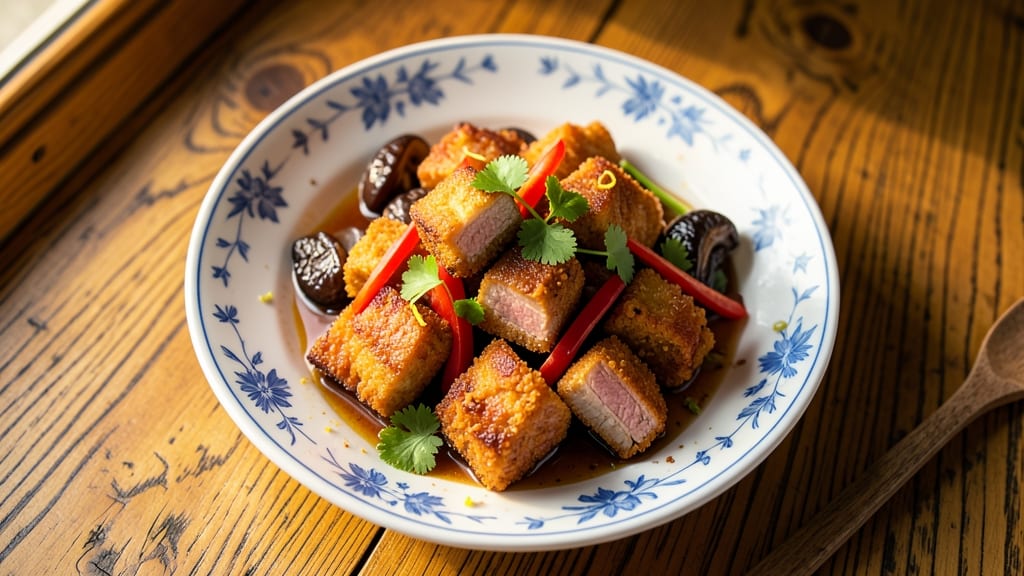
This Chinese fried pork recipe delivers the perfect balance of crispy five-spice crust and juicy pink centers—a technique I perfected after years of studying regional Chinese cooking methods.
The secret lies in the marinade, which tenderizes the meat while infusing it with aromatic spices, and the double-frying process that creates that signature crunch without drying out the interior.
What sets this recipe apart is the attention to texture—starting with a hot, dry pan to render fat and build flavor, then completing the cook in a shallow oil bath for that irresistible golden crust.
I've adapted traditional Cantonese methods to work in a home kitchen, ensuring you get restaurant-quality results without specialized equipment. The five-spice blend (star anise, cinnamon, cloves, fennel, and pepper) adds depth that pairs beautifully with the natural sweetness of the pork.
By the time you're done, you'll have shatteringly crispy edges that give way to tender, juicy meat inside—every bite a perfect contrast of textures and flavors. This dish pairs wonderfully with steamed jasmine rice and quick stir-fried greens, creating a complete meal that feels both comforting and sophisticated.
The aroma alone will have everyone at the table asking for seconds.
Ready to master this technique? We'll walk through every step—from selecting the right cut of pork to achieving that golden-brown crust without fail. Let's get started with a method that's been tested in both professional kitchens and home cook's pans.
Ingredients for chinese fried pork
Pork cubes, aromatic spices, and a crispy crust—this is your shortcut to restaurant-quality Chinese fried pork.
| Ingredient | Amount | Notes |
|---|---|---|
| Pork Shoulder 🥩 | 1 ½ lb | Cut into 1-inch cubes, bone-in preferred |
| Five-Spice Powder 🌶️ | 2 tbsp | Homemade blend or store-bought |
| Soy Sauce 🍶 | ½ cup | High-quality, low-sodium preferred |
| Shaoxing Wine 🍷 | 2 tbsp | Substitute with dry sherry if unavailable |
| Cornstarch 🌾 | ¼ cup | For crispy coating |
| Neutral Oil 🫒 | 2 cups | Peanut or vegetable oil, high smoke point |
| Garlic Cloves 🧄 | 6 cloves | Minced for marinade |
| Ginger Root 🌿 | 1 tbsp | Freshly grated, aromatic |
| Sesame Oil 🫒 | 1 tbsp | Toasted, for aroma |
| White Pepper 🌶️ | ½ tsp | Freshly cracked, not ground |
| Green Onions 🧅 | 4 whole | Sliced, for garnish |
| Salt 🧂 | 1 ½ tsp | Kosher or sea salt |
| Brown Sugar 🍯 | 1 tbsp | Light or dark, for balance |
The pork cut matters here—pork shoulder delivers that perfect balance of fat and lean, staying juicy even after frying. Look for good marbling at Costco or Whole Foods if you want to splurge, but the regular supermarket cut works fine. For the five-spice powder, Penzeys or Asian markets have the best blends, but any store-bought mix with star anise, cinnamon, cloves, fennel, and pepper will do. Fresh ginger and garlic are non-negotiable—they make all the difference in flavor depth. If you're short on time, pre-minced garlic works, but freshly grated ginger is worth the extra minute.
No Shaoxing wine? Dry sherry or even a splash of rice vinegar gets you close—just add a pinch of sugar to balance. The cornstarch is your secret weapon for that crispy crust, but potato starch works too if you're out. For the oil, peanut oil has the highest smoke point, but vegetable or canola oil are fine. The sesame oil is just for aroma—skip it if you're sensitive to strong flavors. Want extra crispiness? Toss the pork in extra cornstarch before the second fry. And if you're feeling fancy, toast the five-spice powder in a dry pan for 30 seconds to deepen the flavors.
Marinate the pork for at least 2 hours (overnight is best)—this is where the magic happens. The fried pork keeps well for 3 days in the fridge, but it's best served fresh. For leftovers, reheat in a skillet over medium heat to restore that crispy texture. Store the marinade separately and use it to drizzle over rice or noodles—it's packed with flavor. Freeze portions for up to 3 months, but the texture won't be as crispy after thawing. Garnish with green onions right before serving—they add a fresh pop of color and brightness.
Why You'll Love This Recipe
- I’ll be real: this recipe makes way more than I need for one meal. The leftovers reheat beautifully—crispy again in the pan or air fryer—and taste just as good the next day. (Yes, even on a Tuesday night.)
- One-Pan Magic: Honestly, this dish is that easy—just marinate the pork shoulder in five-spice powder and soy sauce, toss it in cornstarch, and fry it once. No chopping, no fuss, just golden-brown perfection in 20 minutes.
- Umami Bomb: Between us, that combo of Shaoxing wine and five-spice powder? It’s like a flavor explosion in your mouth. The pork stays juicy inside while the cornstarch crust gets crispy—the kind of texture that makes you reach for seconds without thinking.
- Leftover Hero: I’ll be real: this recipe makes way more than I need for one meal. The leftovers reheat beautifully—crispy again in the pan or air fryer—and taste just as good the next day. (Yes, even on a Tuesday night.)
Step-by-step instructions for Chinese fried pork
Here's how to get that perfect balance of crispy exterior and tender interior every time.
Marinate the Pork Shoulder for Maximum Flavor
Cut the 1.5 lb pork shoulder into 1-inch cubes, making sure each piece is uniform in size. This ensures even cooking and a consistent texture. In a large bowl, combine the 0.5 cup soy sauce, 2 tbsp shaoxing wine, 1 tbsp freshly grated ginger root, 6 minced garlic cloves, 1.5 tsp salt, 1 tbsp brown sugar, and 0.5 tsp freshly cracked white pepper. Mix well to create the marinade.
Add the pork cubes to the marinade and toss to coat evenly. Cover the bowl with plastic wrap and refrigerate for at least 4 hours, or preferably overnight. This long marinating time allows the flavors to penetrate deeply and tenderizes the meat. The pork should absorb the marinade completely, becoming infused with the aromatic blend of soy, garlic, ginger, and five-spice notes.
Prepare the Cornstarch Coating for Extra Crispiness
In a separate bowl, mix the 2 tbsp five-spice powder with the 0.25 cup cornstarch. This combination is key for creating that signature crispy crust. The five-spice adds depth of flavor while the cornstarch ensures a light, airy coating that gets perfectly golden when fried.
Remove the marinated pork from the refrigerator and pat it dry with paper towels. This step is crucial—any moisture on the surface will prevent the coating from sticking properly. Transfer the pork to the cornstarch mixture and toss gently but thoroughly until each piece is completely and evenly coated. Let the coated pork rest for 10 minutes at room temperature before frying. This resting period helps the coating adhere better and prevents the pork from releasing too much moisture into the hot oil.
Deep-Fry the Pork in Small Batches for Perfect Texture
Heat 2 cups neutral oil in a deep pot or Dutch oven to 350°F over medium heat. Use a thermometer to monitor the temperature—this is critical for achieving that perfect crispy crust without burning the exterior. Once the oil reaches temperature, add the coated pork in batches, making sure not to overcrowd the pot. Overcrowding will lower the oil temperature and result in greasy, unevenly cooked pork.
Fry the pork for 3-4 minutes until the exterior is deep golden brown and the coating is crispy. You'll see tiny bubbles forming around the edges—that's your signal that it's ready. Use tongs to remove the pork and transfer it to a paper towel-lined plate to drain excess oil. The internal temperature should reach 160°F when checked with a meat thermometer, indicating that the pork is cooked through but still juicy.
Finish with Sesame Oil for Authentic Flavor
While the pork is still hot, drizzle it with 1 tbsp toasted sesame oil and toss gently to coat. The sesame oil adds a nutty aroma and enhances the overall flavor profile. This is also the time to slice the 4 whole green onions and sprinkle them over the top for a fresh, bright contrast to the rich, spiced pork.
Serve the fried pork immediately while it's still crispy and hot. The exterior should be shatteringly crisp with a light, airy texture, while the interior remains tender and juicy with just a hint of pink in the center. The combination of the five-spice coating, sesame oil, and fresh green onions creates a dish that's both comforting and deeply flavorful—exactly what you'd find in a traditional Chinese restaurant.
Pro Tips For Making Chinese Fried Pork
- CRANK THE HEAT FIRST: That first sear is where the flavor happens—get your wok or pan screaming hot before adding the pork shoulder. I learned this the hard way after greasy, undercooked pork that tasted more like boiled meat than fried. High heat locks in juices and builds that caramelized crust fast.
- VELVET THE PORK: Pound the pork shoulder thin—about ½-inch thick—before cutting into strips. Thinner pieces cook faster and stay tender, while thicker ones turn chewy. Use a rolling pin or meat mallet, but don’t go overboard; you’re not making dumplings here.
- DON’T SKIP THE DOUBLE COAT: Toss the pork in cornstarch twice—first to catch the marinade, then after resting to lock in that crispy exterior. The first coat absorbs the soy and wine; the second ensures a shatteringly crisp finish. Lazy? You’ll regret it when it turns soggy.
- SAVE THE WINE FOR LAST: Add Shaoxing wine only in the final stir-fry stage—it burns off fast and adds depth. Pouring it early just steams the pork instead of infusing flavor. A splash at the end? That’s the move.
Dietary considerations for chinese fried pork
Gluten-Free Adaptations
Skip the cornstarch coating and use 1/3 cup gluten-free all-purpose flour mixed with 1 tbsp tapioca starch instead. Toss the marinated pork in this blend after patting it dry—it creates a crispy, golden crust without gluten.
For extra insurance, I recommend Bob's Red Mill 1:1 Gluten-Free Flour because it mimics the texture of regular flour perfectly. 🌾
Low-Sodium Options
Use low-sodium soy sauce (like Kikkoman Low Sodium) and reduce the salt in the marinade to 1 teaspoon instead of 1.5. Boost flavor with an extra 1/2 teaspoon of white pepper and 1 additional tablespoon of Shaoxing wine—these add depth without extra sodium.
Taste the marinade before using it to ensure it’s still flavorful.
Dairy-Free Considerations
This recipe is naturally dairy-free, but if you're using pre-marinated pork or store-bought five-spice blends, double-check labels for hidden dairy additives. The sesame oil and soy sauce are both typically dairy-free, but always verify.
For extra flavor, add 1 teaspoon of toasted sesame seeds to the cornstarch coating—they add a nutty crunch without any dairy.
Allergen-Friendly Swaps
For sesame allergies, omit the sesame oil and toasted sesame seeds—just use 1/2 teaspoon of neutral oil (like avocado oil) to finish the dish. If you're avoiding garlic, substitute with 1 tablespoon of minced shallots in the marinade.
For ginger allergies, replace it with 1 tablespoon of fresh lemon juice—it adds brightness and balances the richness of the pork.
Vegetarian Substitutes
While pork is traditional, you can create a similar texture with extra-firm tofu or mushroom medley. Press and cube 1.5 lbs of tofu, then marinate it in the same soy-ginger-garlic blend.
Toss in 1/4 cup cornstarch (or gluten-free alternative) and pan-fry in 1/2 inch of oil at 375°F for 4-5 minutes per side until golden. For mushrooms, use shiitake or oyster mushrooms sliced into thick strips—cook them in batches for a meaty texture.
Keto-Friendly Adjustments
This recipe is already keto-friendly, but if you're strict about carbs, skip the brown sugar in the marinade and replace it with 1/2 teaspoon of erythritol or 1 tablespoon of liquid stevia.
Use 100% cornstarch (no fillers) for the coating, and ensure your soy sauce is tamari or coconut aminos for a lower-carb option. The result? A crispy, flavorful dish with minimal carbs—just 3g net carbs per serving!
Nutrition facts
Frequently asked questions
What cut of pork works best for this recipe?
Use pork shoulder for the best results—it has the perfect balance of fat and lean meat that stays juicy while creating that crispy crust. Bone-in cuts work even better as the bone helps retain moisture during frying. If you can't find pork shoulder, pork loin or pork tenderloin work in a pinch, but they'll be slightly less flavorful.
Can I make this recipe without deep-frying?
For a healthier version, use an air fryer at 375°F for 10-12 minutes, shaking the basket halfway. Or pan-fry in 1/4 inch of oil over medium-high heat for 4-5 minutes per side until golden. The texture will be slightly different but still delicious.
How do I get the pork extra crispy?
Pat the pork very dry before coating, and let it rest for 10 minutes after tossing with cornstarch. For maximum crispiness, double-fry: first at 325°F for 2 minutes, then increase heat to 375°F for the final 1-2 minutes. The second fry seals in the crunch!
What's the best way to store leftovers?
Store in an airtight container for up to 3 days in the fridge. To reheat, use a skillet over medium heat for 2-3 minutes to restore crispiness. Avoid microwaving—it makes the crust soggy. For longer storage, freeze for up to 3 months (texture won't be as crispy after thawing).
What sides pair well with this dish?
Serve with steamed jasmine rice and stir-fried bok choy for a classic combo. For extra flavor, drizzle the rice with leftover marinade. Other great pairings include egg fried rice, hot mustard greens, or a simple cucumber salad to balance the richness.