
Main Courses
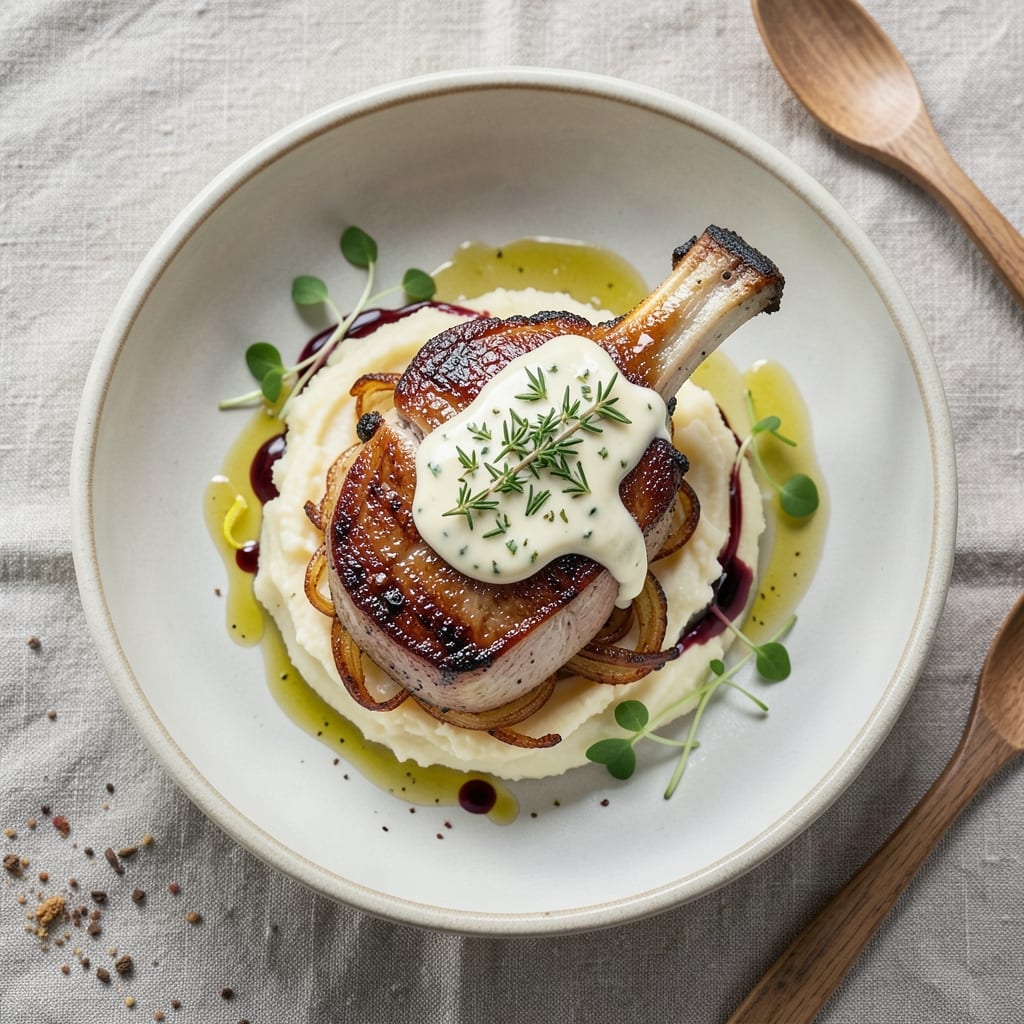
Mastering a fine dining pork chop isn't about luck—it's about precision, patience, and understanding pork's delicate balance between a buttery crust and a pink center that's tender enough to melt. I learned this technique in Charleston, where Chef Chen taught me that even the thickest chops can be transformed into restaurant-worthy perfection with the right method and timing. The secret lies in controlling heat and resting time, ensuring every bite delivers that ideal contrast of textures and flavors.
This recipe starts with bone-in chops—preferably from a heritage pig—for maximum flavor and juiciness. We'll sear them in a screaming-hot cast iron pan to lock in moisture, then finish them in the oven at a precise temperature to guarantee that pink center while developing a golden, crackling crust. The herb butter we'll prepare isn't just for flavor; it's a vehicle for moisture that keeps the meat succulent even after resting. Every step is designed to elevate your home cooking to fine dining standards, where presentation matters just as much as taste.
What you'll end up with is a plate that looks as impressive as it tastes: a perfectly seared pork chop with a glossy, buttery crust, resting on a bed of truffle-infused mashed potatoes and roasted seasonal vegetables. The sauce—a rich red wine reduction—ties everything together, adding depth and elegance. This isn't just dinner; it's an experience that proves fine dining can happen in your own kitchen with the right technique and attention to detail.
For those who want to go further, we'll cover optional garnishes like microgreens or edible flowers to add a touch of sophistication, as well as wine pairings that complement the dish's richness. The key is confidence—once you master this method, you'll never settle for less than restaurant-quality pork chops again. Let's get started on creating a dish that will impress even the most discerning guests.
Ingredients for fine dining pork chop
Precision-cut pork chops, aromatic herbs, and a rich red wine sauce—this is fine dining at home.
| Ingredient | Amount | Notes |
|---|---|---|
| Bone-In Pork Chops 🍖 | 4 whole | Heritage pig, 1-inch thick |
| Unsalted Butter 🧈 | ½ cup | Cold, cubed for searing |
| Fresh Thyme Leaves 🌿 | ¼ cup | Finely chopped, stems removed |
| Fresh Rosemary Sprigs 🌿 | 2 whole | Needles only, finely chopped |
| Garlic Cloves 🧄 | 4 cloves | Minced, for herb butter |
| Extra-Virgin Olive Oil 🫒 | 2 tbsp | For pan searing |
| Diamond Crystal Kosher Salt 🧂 | 1 ½ tsp | Coarse grain, for seasoning |
| Freshly Ground Black Pepper 🌶️ | ½ tsp | Cracked over chops |
| Dry Red Wine 🍷 | ½ cup | Cabernet Sauvignon preferred |
| Beef Stock 🍲 | ¼ cup | Homemade or quality store-bought |
| Cold Water 💧 | ¼ cup | For sauce reduction |
| Truffle Oil 🍄 | 1 tsp | For finishing sauce |
| Fresh Parsley Leaves 🌿 | 0.1 cup | Chopped, for garnish |
The pork chops are non-negotiable—heritage pig bone-in cuts from Butcher Shoppe or your local specialty butcher deliver the best flavor and texture. Look for chops that are 1-inch thick—thinner ones dry out, thicker ones won't sear properly. If you can't find heritage pork, high-quality pork loin chops work in a pinch. The herb butter is where the magic happens: cold butter locks in moisture while the thyme and rosemary infuse flavor. I always make a double batch—one for the chops, one for basting. Fresh herbs matter here; dried just won't cut it for fine dining standards.
No red wine? Dry sherry or beef broth works in a bind, but the acidity and depth are worth hunting down a good bottle. The beef stock should be rich—Kitchen Basics or homemade is ideal. Truffle oil is optional but adds that restaurant touch; Trader Joe's has a decent affordable version. For the herb butter, don't skip the cold cube step—it prevents the butter from turning greasy. If you're feeling fancy, add a pinch of freshly cracked black cardamom to the herb butter for complexity. The parsley garnish should be bright green—store-bought parsley often looks sad, so hit the market if you can.
Pork chops stay fresh 2 days in the fridge if wrapped tightly in parchment. The herb butter keeps 1 week in the fridge, perfect for basting or finishing other dishes. Red wine reduction can be made ahead—it actually improves overnight. Store it in a jar in the fridge for up to 5 days. For presentation, chill the chops 10 minutes before serving to firm up the crust. I always make extra sauce—it's perfect for drizzling over mashed potatoes or roasted vegetables, turning a simple side into a gourmet accompaniment.
Why You'll Love This Recipe
- Same recipe, two vibes: toss it together for a lazy Tuesday or dress it up with a side of mashed potatoes and roasted veggies for company. The bone-in chops even make it feel special without extra effort.
- One-Pan Magic: I swear by this recipe—just sear the chops in butter, add the herbs and garlic, and let the oven do the rest. No flipping, no fussing, just hands-off perfection while you sip wine and pretend you’re a chef.
- Herb-Infused Crunch: That crispy skin with rosemary and thyme clinging to it? It’s like a restaurant-worthy bite every time. The butter bastes the chops until they’re juicy inside, with a crust that’s dangerously good.
- Weeknight to Dinner Party: Same recipe, two vibes: toss it together for a lazy Tuesday or dress it up with a side of mashed potatoes and roasted veggies for company. The bone-in chops even make it feel special without extra effort.
Step-by-step instructions for buttery crust and pink center mastery
Here's how to transform simple pork chops into a restaurant-worthy centerpiece.
Prepare the Herb Butter and Season the Chops
In a small bowl, combine the 0.5 cup unsalted butter, 0.25 cup fresh thyme leaves, 2 whole fresh rosemary sprigs (needles only, finely chopped), and 4 cloves garlic cloves (minced). Mix until the butter is evenly coated with the herbs and garlic, creating a fragrant compound butter. Roll this into a log and chill in the refrigerator while you prepare the chops.
Pat the 4 whole bone-in pork chops dry with paper towels—this is critical for achieving that perfect crust. Season both sides generously with 1.5 teaspoons diamond crystal kosher salt and 0.5 teaspoon freshly ground black pepper. Let the chops sit at room temperature for 20-30 minutes while the butter chills. This ensures even cooking and maximum flavor penetration.
Sear the Chops to Golden Perfection
Heat a heavy skillet (cast iron works best) over medium-high heat until it's smoking hot. Add 2 tablespoons extra-virgin olive oil and swirl to coat the pan. Place the chops in the skillet and cook undisturbed for 4-5 minutes per side, until they develop a deep golden-brown crust. Press down gently on the chops during the first minute to prevent curling and ensure even contact with the pan.
About 1 minute before the chops are done searing, remove the herb butter log from the refrigerator and slice it into 4 thin pats. Place one pat on top of each chop and let it melt slightly, basting the meat with the aromatic butter. Transfer the chops to a warm plate and tent loosely with foil to keep warm while you prepare the sauce.
Deglaze and Build the Wine Reduction
Immediately after removing the chops, reduce the heat to medium and add 0.5 cup dry red wine to the skillet. Scrape up all the browned bits from the bottom of the pan with a wooden spoon—this is where all the flavor lives. Let the wine simmer for 3-4 minutes until it reduces by half and the alcohol smell dissipates. You want a rich, syrupy consistency that will beautifully coat the chops.
Pour in 0.25 cup beef stock and 0.25 cup cold water, then bring to a gentle simmer. Add 1 teaspoon truffle oil and let the sauce reduce by another third, about 5-6 minutes. The sauce should coat the back of a spoon and have a velvety texture. If it thickens too much, add a splash of water to reach your desired consistency.
Finish and Serve with Confidence
Return the chops to the skillet, spooning the sauce over them generously. Let them sit for 2-3 minutes to absorb the flavors and heat through. The internal temperature should read 135-140°F—this ensures a perfect pink center that's tender and juicy, not overcooked. If the sauce appears too thin, reduce it further by simmering uncovered for 1-2 minutes.
Transfer the chops to a warm serving platter and drizzle the remaining sauce over the top. Garnish with 0.1 cup fresh parsley leaves, chopped finely. Serve immediately with your choice of sides—roasted vegetables or a simple arugula salad complement the rich flavors beautifully. Each bite should deliver that crispy, buttery crust with a succulent, pink center and a depth of herbaceous, wine-infused sauce.
Pro Tips For Making Fine Dining Pork Chop
- CRANK THE HEAT FIRST: Bone-in pork chops need that initial sear to lock in flavor, so blast your pan until it’s smoking hot before adding the butter. I used to wimp out with medium heat and ended up with butter that just melted instead of browned—now I wait until the butter foams like a latte before adding the chops.
- SALT THE CHOPS 40 MINUTES EARLY: Skip the last-minute salting—bone-in chops need time for the salt to work its magic. Pat them dry, then sprinkle generously with kosher salt and let them sit uncovered on a rack (yes, even if you’re impatient like me). This guarantees the crust forms properly, not just on the surface but deep enough to matter.
- STOP WHEN IT’S 130°F: The instant the internal temp hits 130°F, pull the chops from the pan—no waiting for 145°F. Bone-in cuts carry their own heat, and overcooking turns them from tender to chewy. Use a meat thermometer; your eye alone won’t cut it here.
- SAUTE THE GARLIC LAST: Toss whole garlic cloves into the pan with the thyme and rosemary first, but remove them before the butter turns golden. Then, crush a few fresh cloves in the empty pan for the final 30 seconds—this keeps them fragrant without burning. I learned this the hard way after serving bitter, charred garlic with my first attempt.
Flavor customization for these flavors
Herb Butter Variations
Swap the classic thyme and rosemary for fresh sage and lemon zest—I love this combo for a bright, citrusy twist that pairs beautifully with the wine reduction. Simply replace the thyme with 0.25 cup fresh sage leaves and add 1 tablespoon lemon zest to the herb butter. For a smoky profile, try fresh tarragon and a pinch of smoked paprika—this works especially well with a bourbon reduction instead of wine. 🌿
Spice-Infused Crust
For an extra layer of complexity, add 1 teaspoon ground coriander and ½ teaspoon ground cumin to the seasoning mix before searing. This Middle Eastern-inspired blend adds warmth that complements the herb butter beautifully. If you prefer heat, sprinkle ½ teaspoon crushed red pepper flakes over the chops before searing—just be sure to rest them longer to let the flavors meld. 🌶️
Sweet and Savory Balance
Add a touch of sweetness by incorporating 1 tablespoon honey into the wine reduction while it simmers. This works especially well with the sage-lemon herb butter variation, creating a perfect balance of sweet and savory. For a more decadent touch, finish the chops with a drizzle of balsamic glaze—just reduce 2 tablespoons balsamic vinegar in a small pan until syrupy and brush it over the top before serving. 🍯
Umami Boost
Elevate the dish with umami depth by adding soy sauce or fish sauce to the wine reduction. Start with 1 teaspoon soy sauce (or ½ teaspoon fish sauce for a more subtle touch) and adjust to taste. This works particularly well with the coriander-cumin spice blend, creating a rich, savory profile that’s perfect for fine dining. For extra richness, stir in 1 teaspoon miso paste at the end of cooking. 🍜
Regional Twists
For a Southern-inspired version, add hot honey to the herb butter—just mix in 1 tablespoon hot honey with the cold butter before chilling. This adds a subtle heat that pairs perfectly with the wine reduction. If you're serving this at a holiday gathering, consider adding cranberry sauce as a side—simmer 1 cup fresh cranberries with 2 tablespoons brown sugar and a splash of orange juice for a festive touch. 🍯
Nutrition facts
Frequently asked questions
Why is a pink center important in fine dining pork chops?
A pink center indicates perfectly cooked pork that's tender and juicy, not overdone. At 135-140°F internal temperature, the collagen breaks down just enough to create that melt-in-your-mouth texture while maintaining moisture. Overcooking to 160°F turns pork dry and tough—something you'd never serve in a fine dining setting.
Can I use boneless pork chops for this recipe?
While bone-in chops give the best flavor and moisture, you can adapt this for boneless cuts. Use ½-inch thick chops and reduce cooking time to 3-4 minutes per side. The herb butter technique still works, but you'll lose that beautiful bone-in presentation. For fine dining, I recommend sticking with bone-in for maximum impact.
What's the best way to reheat leftover pork chops?
Never microwave! For restaurant-quality results, reheat in a 350°F oven for 8-10 minutes with a splash of beef stock. Place chops on a wire rack over a baking sheet to maintain crispiness. If you must use the microwave, cover with a damp paper towel and heat for 20 seconds, but expect less ideal texture.
How do I make this dish vegetarian-friendly?
Swap pork for portobello mushrooms or king oyster mushrooms—they hold up beautifully to searing. Use the same herb butter technique and reduce cooking time to 4-5 minutes per side. For texture, add 1 teaspoon nutritional yeast to the herb butter. The wine reduction works perfectly with mushrooms for a rich, umami-packed alternative.
What wine pairs best with this dish?
A bold Cabernet Sauvignon or Syrah complements the red wine reduction perfectly. For white wine lovers, try a Chardonnay with enough body to stand up to the rich flavors. I personally love a Pinot Noir from Oregon—its bright acidity cuts through the butter while enhancing the herb notes. Always serve slightly chilled (55-60°F).