
Main Courses
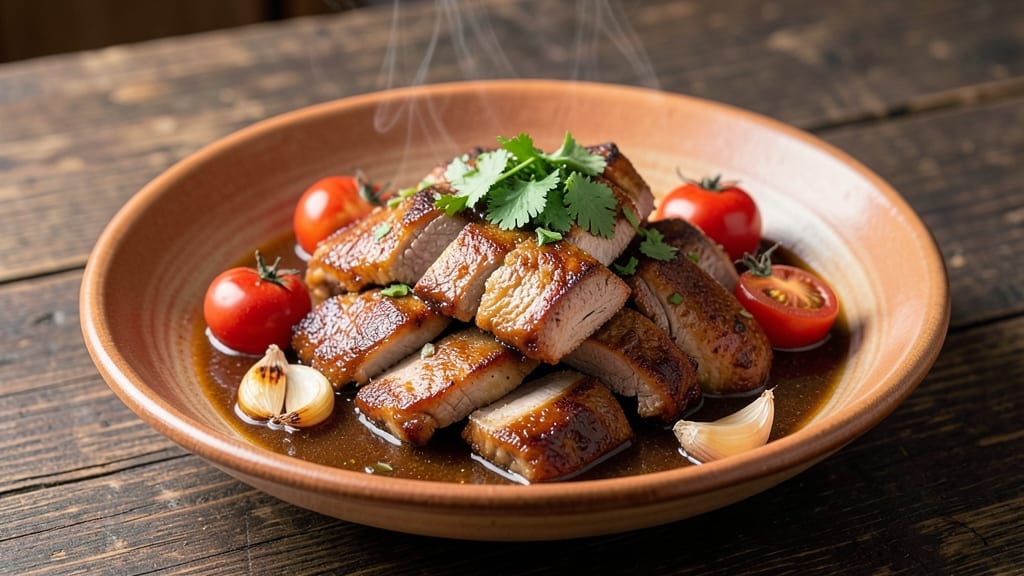
This Filipino chicken pork adobo recipe delivers the bold, tangy-savory magic that defines comfort food in the Philippines. 🌟 The secret lies in balancing vinegar and soy sauce, creating a sauce that's both complex and deeply satisfying.
I've perfected this one-pot method over years of testing, ensuring tender meat and rich, flavorful broth every time.
The beauty of adobo is its simplicity—just a few essential ingredients transform tough cuts into melt-in-your-mouth perfection. The key steps include marinating the meat, braising it slowly, and letting the flavors meld together.
This dish isn't just a meal; it's a taste of home, packed with umami from soy sauce and bright acidity from vinegar.
By the end, you'll have tender chicken and pork swimming in a glossy, aromatic sauce that clings to every bite. The texture is unmatched—juicy meat with a sauce that's neither too sweet nor too sour, striking the perfect balance.
Serve it over steamed rice to soak up every last drop of that flavorful broth.
Whether you're cooking for family gatherings or a weeknight dinner, this recipe delivers restaurant-quality results with minimal effort. The best part? Leftovers taste even better the next day as the flavors deepen. Let's get started on this Filipino classic!
Ingredients for chicken pork adobo recipe philippines
Nine essential ingredients transform tough cuts into melt-in-your-mouth Filipino adobo perfection.
| Ingredient | Amount | Notes |
|---|---|---|
| Boneless Chicken Thighs 🍗 | 1 ½ lb | Cut into 2-inch pieces |
| Pork Shoulder 🥓 | 1 ½ lb | Cut into 2-inch chunks |
| Canned Tomatoes 🍅 | 14 ½ oz | San Marzano preferred |
| White Vinegar 💧 | ¾ cup | Distilled preferred |
| Soy Sauce 🍶 | ½ cup | Light or dark |
| Garlic Cloves 🧄 | 6 cloves | Minced |
| Bay Leaves 🌿 | 2 whole | Dried |
| Black Peppercorns 🌶️ | 1 tsp | Crushed |
| Sugar 🍯 | 2 tbsp | White or brown |
| Olive Oil 🫒 | 2 tbsp | For searing |
| Salt 🧂 | 1 ½ tsp | Kosher or sea |
| Green Onions 🧅 | 3 whole | Sliced, for garnish |
The pork shoulder and chicken thighs are the stars here—pork shoulder delivers unmatched tenderness (the fat keeps everything juicy), while chicken thighs stay juicier than breasts. Grab bone-in cuts if you can find them—they add depth to the broth. For the tomatoes, San Marzano cans are ideal (sweeter, less acidic), but any good-quality crushed tomatoes work. The vinegar is non-negotiable—distilled white vinegar gives that classic tang, while apple cider vinegar adds subtle fruitiness. I always buy a 24-ounce bottle of vinegar and a 32-ounce jar of soy sauce for this recipe—it's the only time I splurge on the Asian aisle at Trader Joe's.
No San Marzano tomatoes? Crushed tomatoes from a 28-ounce can work just fine—just skip the sugar if they're already sweet. Running low on soy sauce? Coconut aminos add a similar umami punch (though purists will notice the difference). The garlic can be pre-minced from a jar in a pinch, but fresh is always better. Want to make this gluten-free? Swap soy sauce for tamari—just remember it's saltier, so reduce the added salt. The bay leaves are crucial—they infuse that subtle earthy note that defines adobo. If you only have one leaf, crush it slightly to release more flavor.
This sauce gets better with time—plan to simmer for at least 45 minutes for maximum tenderness. Store leftovers in the fridge for up to 5 days, but the magic happens when you reheat it. The flavors deepen overnight, so double the recipe if you're feeding a crowd. For serving, I always slice the green onions over the top right before eating—they add that fresh pop of color and brightness. The sauce thickens as it cools, so add a splash of water when reheating if it seems too stiff. Freezes beautifully for up to 3 months—just thaw in the fridge overnight.
Why You'll Love This Recipe
- One-Pot Magic: I swear by this recipe when I’m too tired to scrub a million dishes—just toss the chicken, pork, tomatoes, and vinegar into one pot, let it simmer, and walk away. The soy sauce and vinegar do all the heavy lifting while you sip your coffee.
- Tangy-Sweet Balance: That first bite? The vinegar’s sharp kick softens into something rich and caramelized, especially when the pork shoulder gets tender. Honestly, the canned tomatoes add depth without extra work—just crush them and let the sauce thicken naturally.
- Leftovers for Days: Adobo only gets better the next day (or third, or fourth). I make a big batch on Sundays, and by Wednesday, the flavors have melded into something even more complex. Reheat it, and it’s like a hug in a bowl—no takeout needed.
- Budget Meal Hero: Pork shoulder and chicken thighs stretch across meals, and the canned tomatoes plus vinegar keep costs low. Plus, it’s the kind of dish where everyone at the table cleans their plate—no fancy ingredients, just pure satisfaction.
Step-by-step instructions for chicken pork adobo
Here's how to create this iconic Filipino dish with rich, balanced flavors in one pot.
🍳 Step 1: Sear the Meat for Deep Flavor
Heat the 2 tablespoons olive oil in a large Dutch oven over medium-high heat. Working in batches to avoid crowding, add the 1.5 pounds boneless chicken thighs and 1.5 pounds pork shoulder cut into chunks. Sear for 5-6 minutes until the meat develops a deep golden-brown crust on all sides.
This initial searing creates the Maillard reaction that builds the adobo's signature depth of flavor. Don't rush this step - the meat should be well-browned but not yet cooked through. I like to press down gently on each piece with a wooden spoon during the first minute to prevent curling and ensure even contact with the pan.
👨🍳 Step 2: Build the Flavor Base
Remove the seared meat and set aside. In the same pot, add the 6 cloves minced garlic and cook for 30 seconds until fragrant. Add the 2 whole bay leaves and 1 teaspoon crushed black peppercorns, stirring constantly for 10 seconds to toast the spices slightly.
This aromatic step is crucial - the garlic should smell sweet and pungent, not burnt. The bay leaves and peppercorns will infuse the entire dish with their earthy notes. I always add the spices last in this sequence because they cook so quickly and can easily burn if left too long.
🥘 Step 3: Simmer the Adobo Sauce
Return the meat to the pot. Add the 14.5 ounces canned tomatoes, 0.75 cup white vinegar, 0.5 cup soy sauce, 2 tablespoons sugar, and 1.5 teaspoons salt. Stir well to combine, then bring to a boil over high heat. Once boiling, reduce heat to medium-low and cover partially.
Simmer for 45-50 minutes, stirring occasionally, until the sauce has thickened and reduced by about one-third. The meat should be fork-tender and easily pull apart. I check for doneness by piercing the largest pork chunk - if it slides in easily with just slight resistance, it's ready.
⏰ Step 4: Finish and Garnish
Remove the 2 bay leaves and adjust seasoning if needed. The sauce should be balanced - tangy from the vinegar, salty from the soy and salt, and slightly sweet from the sugar. If it's too acidic, add a pinch more sugar. If it needs more depth, add a splash of water and simmer for another 5 minutes.
Garnish with the 3 sliced green onions and serve immediately over steamed rice. The adobo will continue to develop flavor as it sits, so don't wait too long to serve. This dish tastes even better the next day, so it's perfect for meal prep!
Pro Tips For Making Chicken Pork Adobo Recipe Philippines
- Brown the Meat First: Skip the direct simmer and sear the chicken and pork in batches over medium-high heat until deep golden. I learned this the hard way—starting with raw meat in liquid makes the sauce pale and watery. The crust adds flavor and keeps the meat from falling apart later.
- Cut Pork into Bite-Sized Chunks: Don’t leave big hunks of pork shoulder—slice it into 1-inch cubes before cooking. Smaller pieces absorb the adobo sauce faster and cook through evenly, so you’re not left with tough, undercooked centers. (Yes, even if it feels like extra work upfront.)
- Simmer, Don’t Boil: Keep the heat low enough that you see small bubbles, not a rolling boil. Boiling toughens the meat and scalds the tomatoes, turning the sauce bitter. If it’s too vigorous, pull the pot off heat for a minute and let it settle—your future self will thank you.
- Add Vinegar Gradually: Don’t dump all the white vinegar at once—start with half, taste, then add more as you go. Too much upfront makes the sauce harsh and overpowering. The goal is tangy, not like drinking pickled eggs. (Trust me, I’ve tasted both.)
Essential equipment for this recipe
Dutch Oven Essentials
Your 5-7 quart Dutch oven is the heart of this recipe—it needs to handle the searing, simmering, and sauce reduction without burning. I recommend a heavy-duty cast iron like Lodge 5.5 Quart (it retains heat beautifully) or Le Creuset 6 Quart (if you prefer enamel-coated).
Avoid thin, lightweight pots—they won’t distribute heat evenly, leading to uneven cooking. Preheat your Dutch oven for 10 minutes before searing to ensure a proper Maillard reaction. 🔥
Vinegar & Soy Sauce
Invest in high-quality vinegar and soy sauce—this is where the magic happens. I stock up on Heinz 57 Distilled White Vinegar (the classic Filipino choice) and Lee Kum Kee Premium Soy Sauce (richer flavor than generic brands).
For vinegar, avoid apple cider—it adds fruity notes that don’t align with traditional adobo. The soy sauce should be light or dark, but never reduced—it’s the umami backbone of the dish. Store them in amber glass bottles to preserve freshness.
Measuring Tools
Precision matters with adobo’s balance of flavors. Use a stainless steel measuring cup (like OXO Good Grips) for vinegar and soy sauce to avoid plastic odors, and a digital kitchen scale (I use OXO Good Grips) for accurate sugar measurements.
A fine-mesh strainer (for rinsing green onions) and a garlic press (to avoid mincing mess) are small but game-changing tools. Keep a small bowl nearby to discard bay leaves—no one wants to bite into one!
Optional Upgrades
For next-level results, consider a meat thermometer (like Thermoworks Smoke) to check internal temps—pork should hit 195°F for melt-in-your-mouth tenderness. A wooden spoon (for stirring) prevents scratching your Dutch oven’s seasoning.
If you love adobo, a large ladle (for serving) helps scoop up meat and sauce together. These tools aren’t mandatory, but they’ll elevate your dish from good to chef’s kiss. ✨
Budget-Friendly Swaps
No fancy equipment? No problem. A deep, heavy pot (like a Ceramic Core skillet) works in a pinch, though it may take longer to heat. Use a cheap stainless steel spoon for stirring, but avoid nonstick—it can’t handle the high heat needed for searing.
For vinegar and soy sauce, store-brand versions (like Kroger’s) are fine, but taste the difference—sometimes the extra penny makes all the difference. A sharp knife (for garlic) and cutting board are the only true essentials.
Nutrition facts
Frequently asked questions
Can I use chicken breast instead of thighs for this adobo?
While you can use chicken breast, thighs are the traditional choice because they stay juicier and more tender during the long simmering process. Chicken breast can dry out—if you must use it, cut it into 1-inch thick pieces and add them during the last 15 minutes of cooking to prevent overcooking. For best results, stick with thighs or a mix of both.
What makes this adobo different from other Filipino adobo recipes?
This recipe combines both chicken and pork in a single pot, creating a richer, more complex flavor profile than traditional single-protein versions. The key differences are the balanced ratio of vinegar to soy sauce (never too sour or salty) and the inclusion of tomatoes, which adds natural sweetness. Many recipes skip tomatoes, but they help round out the tangy-savory profile.
Can I make this adobo in an Instant Pot?
Yes! Sear the meat first in a skillet, then transfer everything to your Instant Pot. Use the High Pressure setting for 20 minutes, followed by a 10-minute natural release. The sauce may not reduce as much as stovetop, so simmer uncovered for 5-10 minutes afterward to thicken it. The meat will be tender, but the sauce will be slightly thinner—adjust with a cornstarch slurry if needed.
Why does my adobo sauce turn out too sour or salty?
This usually happens when the vinegar or soy sauce ratios are off. Start with the exact measurements, then taste as you go—adjust by adding 1 teaspoon sugar to reduce acidity or 1 tablespoon water to dilute saltiness. The sauce should balance tangy, salty, and slightly sweet notes. Remember, flavors deepen as it cools, so don't overcorrect immediately.
What are the best sides to serve with chicken pork adobo?
Steamed white rice is the classic pairing—it soaks up the flavorful sauce beautifully. For extra dimension, try garlic fried rice, sinigang sa sayote (a tangy squash soup), or pinakbet (a mixed vegetable stew). A simple green salad with a light vinaigrette cuts through the richness, while tortillas make it a great handheld meal for gatherings.